Showing posts with label Major Penguin Update. Show all posts

Tuesday, 21 May 2013

Are You Ready To Take The Big Blow? Penguin 2.0 Is On the Way!


PENGUIN – AN INTRODUCTION

Most of you must be familiar of Google Penguin – believed to be the search engine giant’s latest weapon to counter websites that deliberately violates Google’s Webmaster Guidelines. Since the latest Google update Penguin 2.0 is on its way to hit soon; it is important for you to understand the basics of the update so that you stay clear of the black-hat SEO techniques such as keyword stuffing, cloaking, participating in link schemes, deliberate creation of duplicate content, etc. disapproved by Google – and save your website from being prone to fall in search engine rankings.

PENGUIN – THE STORY BEHIND

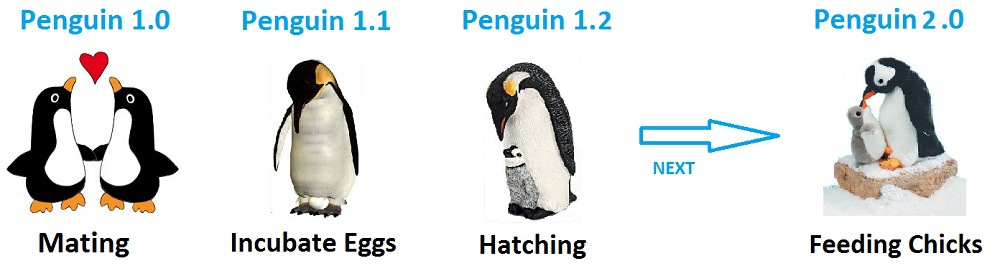
Google Penguin – code named for Google algorithm update was first announced on April 24, 2012 after weeks of speculation over Google’s strategy to penalize ‘Over-optimization’. Initially rolled out as ‘Webspam Update’, this was soon coined as Penguin. Its Penguin 1.0 impacted an estimated 3.1% of English queries by making adjustments to a number of spam factors, including keyword stuffing.

The next Google algorithm update, Penguin 1.1 (2nd Penguin Update) was rolled out exactly a month later in May, 2012 that impacted almost 0.1% of English language search queries. This was in fact believed to be Google’s first targeted data update after the “Penguin” algorithm update that was processed outside of the main search index.

Thereafter, was rolled out the Penguin’s third update Penguin 1.2 (3rd Penguin Update) in October 2012, believed to have impacted 0.3% of English language search queries.

Now, Google is all set to make the biggest splash ever with the soon-to-be-released  Penguin 2.0 (Next Generation of Penguin, 4th Update) – in its effort to combat the burgeoning violations in its search engine policies with its main target being spamdexing (including link bombing). In short, the strategic goal of Google Penguin is to display higher quality websites at the top of Google’s search results.

So, are you ready to take the big blow? We will tell you what to expect from Penguin 2.0 and how you can save your website from the onslaught of the update.
penguin-2-0 

WHAT WILL YOU EXPECT AND/OR HOW TO SAVE YOURSELF FROM PENGUIN 2.0?

Avoiding Advertorial Spam

Advertorial spam is an ‘unscrupulous’ search engine marketing technique that allows the selling of links or entire advertorial pages with embedded links of a nondescript website with the content of a prestigious website that pass PageRank. But with the advent of Penguin 2.0, selling links that pass PageRank will violate Google’s quality guidelines leading to consequences like losing trust in Google’s search results, reduction of the site’s visible PageRank in the Google Toolbar and lower rankings for that site in Google’s search results.

Ensure that no paid links on your site pass PageRank. Remove any paid links or advertorial pages (if any), or make sure that any paid hyperlinks have therel=”nofollow” attribute. You may later submit a ‘reconsideration request’ after ensuring that no paid links on your site pass PageRank.

Monitoring Spammy Queries

Penguin 2.0 is expected to come hard on the aspect of monitoring spammy queries. As elaborated by Google’s Head of Webspam, Matt Cutt; some websites in the pursuit of higher rankings or traffic use techniques (that don’t benefit users), with the intent to look for shortcurts of loopholes that would rank pages higher than they deserve to be ranked. This include all sorts of webspam techniques from keyword stuffing to link schemes – that attempt to thrust sites higher in rankings
Google is of the view that Penguin 2.0 holds no risk for all those who practice the so-called “white hat” SEO tactics.

Working upstream at Link Spammers

Google is expected to come down heavily in penalizing link spammers who still participate in quick and easy tactics of trying to deceitfully manipulate its search results. In its endeavor in working upstream at link spammers courtesy the previous Penguin updates, network after network has been hit by the paid link penalties besides resulting in a huge downgrade in ranking.
 Avoid using short sighted SEO techniques like link networks because it is grossly unwise to build your rankings on networks of links that can be penalized within seconds by Google.

More Sophisticated Link Analysis
Google promises to come up with better and more sophisticated link analysis software with its next update, which one believes will be better at understanding links.

Concentrate on conducting link analysis that benefits your ranking

Improvements on Hacked sites

Google has been quite serious about its dealing with hacked sites and their index – specially labeling the search results of potentially hacked sites, removing those sites from search engine rankings and also warnings webmasters about the hack.

It’s your responsibility as site owner to ensure that your site isn’t spammy. But, in all eventualities of your site being hacked or getting spammy, Penguin 2.0 is sure to remove your site, but with an alert message via Google webmaster console and even by emailing you about the hack and the consequent removal of the site.

Authority Boost in Algorithm

Google is said to be working on an algorithm to give authorities in in any specific space – medical, travel, education, etc. a ranking boost for being that authority i.e. rank those a little more highly. While Google tried to do this earlier within Google News, Penguin 2.0 is contemplating trying to determine subject authorities within Web search.

You can benefit from this algorithm by posting quality content on your website that is informative, with comprehensive data and one that is factually correct, to ensure your authority boost.

Moderating the Impact of the Panda

One of the major changes expected Penguin 2.0 update is moderating the impact of the Panda algorithm for sites that are in the “gray area” or “border” of being impacted by the Panda algorithm. While Google has succeeded to help refine things for sites that are kind of in the border zone, some additional signals of quality will definitely help sites that were previously affected.
But it still requires to be seen if at all the sites will benefit in ranking after the Panda algorithm is softened. Let’s wait and watch.

Domain Clusters in SERPs
A reduction in the number of clusters of the same domain name showing on the first page of Google’s search is expected this year. While Penguin 2.0 promises to make the search results on the first page even more diverse; in all likelihood you may see clustered results from the same domain name there too when you click to the second results page.

Google is persistently tweaking as to how many search results from the same domain name are showing up on a single page of search results.

Enhanced Webmaster Communication

Google, as always is working towards enhancing their communication with webmasters. With the Penguin 2.0, you can now expect even more detailed examples within webmaster notifications that are received within Google Webmaster Tools.

Enhanced webmaster communication will reduce the number of ‘black hat’ webmasters from showing up, while giving smaller businesses resorting to white hat SEO techniques, the opportunity to rank better.

Synopsis

I hope the aforementioned discussion on what to expect from Penguin 2.0 in the coming weeks will surely help you to introspect on your current status and pull out a viable SEO strategy. This will not only help you align with the new Google algorithm update, but also ensure that you benefit in improving your search engine rankings, while take preventive actions of minimizing the risk of being penalized or downgraded in rankings.

Email : naturalseosolution@gmail.com | Mo : 8763723377 | Skype : sunmoon.mohanty

Monday, 20 May 2013

How Traditional Guest Blogging Practices Will Change After Next Major Penguin Update


The most popular way of building back links right now is guest blogging. Why is it so popular? Simple, it’s so effective at driving up keyword rankings – when it’s done consistently and when those guest posts are published on authoritative domains that are relevant.

It’s been in the back of my mind for some time now, actually since the first iteration of the Google Penguin update, that guest blogging may become a target of Google. I believe that guest blogging will still continue to be effective after the next major Penguin update, however the way in which you build links through guest blogging will change.

This is how I think guest bloggers will be impacted:

Devaluation of Websites

Sites that have the majority of their outbound links pointing at a single website will eventually be tagged with a penalty. Google likes it best when you link to lots of different websites that are authoritative. When you write, find ways to naturally work those types of links into your content.

Websites that do not create pages that have substantial content or that create non-relevant content are going to be tagged with a penalty. If they aren’t tagged with a penalty then at the very least the links within their content won’t pass much authority or weight.

Bloggers who make a habit of regularly publishing non-relevant links and content together will have their blogs significantly devalued.

When you research your list of potential candidate websites to guest blog for, you want to short list those that do not link to low quality websites and that are very relevant to the site you intend to have linked to within the post you will write for them. Don’t be afraid to link out within your guest blog post to other sites which you have no vested interest in but that offer value to the reader or contribute significantly to the content of your post.

Devaluation of Back Links

Using a keyword rich text link in the first paragraph of your guest blog post? Those links will likely carry less weight soon.

Rehashing older previously published content and re-publishing it with embedded links? Those types of links will also not carry as much weight in future. They’ve already lost some value over the past year. This trend will continue.

The links that you acquire within the author bio section of your guest blog posts no longer carry the same weight as they did previously. In future it is possible and likely that those links will offer even less weight and value than they currently do. Google will be a lot more selective about whose links receive more or less weight.

Don’t waste your time with techniques that allow you to easily and quickly acquire links in bunches. Put more emphasis on building value into the content you create. Creating fantastic content will garner links from people that naturally want to link to your content. If that sounds like deja vu to you, that’s because you’ve probably been told this numerous times before.

The Rise of Co-occurrence As a Ranking Factor

Traditional signals that influence rankings: keyword placement, anchor text, links and authority – have long been a staple practice when trying to get a website to rank high. Over the past several years there’s been a trend of citations emerging to improve local rankings and to date I think that we’re witnessing more co-occurrence of words, phrases and links within search queries and textual content having more of an influence in rankings. Anchor text will likely still play an important role and provide signals but soon Google will be looking at links and anchor text in a totally different way.

co-occurrence

You can see examples of co-occurrence in play anytime you look through a Google results page for a query and find sites ranking high without the presence of authoritative links, relevant anchor text back links, the search query in the HTML title and a sprinkling of query occurrences in the document body.

In a very brief way it can be explained that co-occurrence is about the presence and frequency of terms that tend to co-occur on the same pages without being hyperlinked. The concept of co-occurrence and the theory behind how it works and how Google may be using it is extensive. More extensive than what we are covering here in this post. Here’s a better and more in-depth explanation of what co-occurrence is.

Your take away from this: Don’t think it always necessary to link back to your website from inside of your guest blog post. Create useful and engaging content that educates readers. You can make a mention of your company without hyperlinking to your company, if it’s appropriate to do so. Rarely is it appropriate to mention your company in a guest blog post outside of the author bio section, unless you’re linking to content that substantially adds knowledge and support to your guest post.

Author Rank

Author rank is Google’s way of seeing where on the web you publish your content. If you stick to a regular schedule of publishing fantastic content then Google will soon begin placing more authority and weight on your content.

Conversely, if you continuously publish low quality fluff and filler content Google will be tracking that too and you’ll find many of the links in those types of content devalued in time, regardless if your content is published on a high authority domain or not. In short, Google won’t just be devaluing websites and links, but also devaluing authors too.

Going forward you need to be very choosy with the content that you publish. If you want to learn how to write good quality content read this post. Personally, when I write a piece of content I’ll often hammer out my thoughts into a document, save it and then come back to it in 24 hours and refine my message. I edit with two criteria in mind:
  1. Does this content make sense from start to finish or does it sound confusing?
  2. Am I providing significant value to the reader or am I about to publish a piece of rubbish?

Social Media Signals

Most of you will know that the more often your content is shared, voted on and liked socially the better that content may perform in Google. While this has been the case for some time now, some content creators, publishers and website owners have been gaming the system by paying people and organizations to create social shares, votes and likes in mass quantities for their content.

What’s likely to happen after the next major Penguin update rolls out is that Google will probably pay less attention to the volume of social shares and pay more attention to who is sharing that content. If your content is shared socially by a person with a network of 300 or 400 influencers following their social media accounts, that will likely have more weight in Google than if your content were shared by a person with 50,000 to 100,000 bot created social media accounts. If this isn’t the case presently you can bet it will be soon.

It’s also probable that Google will look at your own social media accounts to determine if you are sharing your own guest posts on your own social accounts.

Write content that you wouldn’t mind having your name associated with, content that you’d have no problem sharing on your own social profiles.

Start building relationships with influencers who have a large following on their social profiles. If your content is worth sharing then those relationships you’ve built will come in handy and they may decide to share your content with their followers when you write a great post and ask them to share it.

In Summary

Some of the things that I predicted above may not in fact take place when the next major Penguin update rolls out, however they will likely be a part of Google’s algorithm in the near future.

How many other ways do you think traditional guest blogging practices will need to change after the next major Penguin update rolls out?