
When starting a new website, one of the first and most important decisions you have to make is choosing a domain name.
That choice will impact the website’s success in nearly every area,
included search engine optimization (SEO) and social media marketing
(SMM). Let’s examine how a domain name impacts SEO and SMM and then
analyze the factors that make a good domain name.
Should I Choose A Keyword Domain?
For years SEOs and Search marketers have often purchased domains that contained their targeted keywords in order to increase CTRs and to help gain higher rankings on Google, Yahoo and other search engines. Let’s examine this strategy to determine if it is still effective.
Many SEO strategists would purchase exact match domains (EMDs), which are domains that exactly match the keyword phrase they are targeting. For example, if they want to rank for “buy green widgets” the person might purchase BuyGreenWidgets.com. EMDs offered two advantages.
Keyword Domains For Increased CTR
In some cases, owning a premium keyword domain can increase click-through rates on ads and SERP listings:
Having a domain name that matches your target keyword(s) does offer some benefits, but there is a bigger factor you should consider: the brandability of the domain.
Your brand is important, and your domain name is the foundation upon which your online brand will be built. Your domain name is how users will find, remember, share and identify your company online. In both social media and search engines, the domain name is the primary way by which users can identify to “whom” the link will lead.

While some marketers think that SEO is only about keywords and links, the reality is that Google likes brands. Google CEO Eric Schmidt once said that “brands are the solution, not the problem. Brands are how you sort out the cesspool. Brand affinity is clearly hard wired. It is so fundamental to human existence that it’s not going away.” The first step to building a brand is choosing a brandable domain.
7 Tips for Choosing A Brandable Domain
What is a brandable domain name? Start with these 7 factors to consider when choosing a brandable domain name.
Pick a .com extension. In most cases, .com is the best choice. This is because .com is the standard, the norm. Most users assume that a company’s website will end with .com; after all, 75% of all websites have a .com extension.
Be memorable. Users must be able to easily remember your domain name/brand. As Ashley Friedlein, CEO and Co-founder of Econsultancy, said, “Brand is the sum total of how someone perceives a particular organization.” You can only have a lasting influence on how people perceive you if they actually remember you.
Be relevant. Words have implicit meanings and connotations; do a little research to ensure that your domain name communicates your desired message. Here is a quick and easy way to test a domain name: go to Amazon Mechanical Turk and run a survey with at least 100 people. Just provide your domain name (nothing else) and ask users to guess the purpose of the company. The responses you receive should provide valuable insight into any implicit meanings your domain may connote.
Easy to spell. Your domain name must be easy to spell. Avoid commonly misspelled words, intentional misspellings and hyphens. If you purchase a domain name with numerals (eg 1widget.com), also purchase the domain name with the number spelled out (eg onewidget.com). Popular bookmarking site Delicious actually had to change its domain name because so many users had difficulties remembering how to spell it.
Sound authoritative. Your domain name should sound like a trustworthy authority. As this research brief puts it, users “demonstrate a clear preference now for credibility and trustworthiness in a domain name.” Remember Margaret Thatcher’s advice: “Being powerful is like being a lady. If you have to tell people you are, you aren’t.” Avoid choosing a domain such as bestwidget.com.
Shorter is better. Keep your domain name short; 1 or 2 words is best. The top 100,000 websites, on average, have 9 characters in their domain names.
Be unique. One of your marketing goals should be to build a distinct brand that stands out from your competitors. Start by choosing a unique and distinctive domain name. Names like YourDiscountInsuranceStore.com sound generic and unremarkable compared to names such as Google.com, Yahoo.com and Zazzle.com which sound unique.
How To Find A Great Domain Name
Choosing a domain name can be hard. In many cases the most obvious brandable domain names are already registered and would be expensive to purchase. Set up a brainstorm session with your team to develop a few ideas. If it helps, use these three formulas to brainstorm possible domain names.
Should I Choose A Keyword Domain?
For years SEOs and Search marketers have often purchased domains that contained their targeted keywords in order to increase CTRs and to help gain higher rankings on Google, Yahoo and other search engines. Let’s examine this strategy to determine if it is still effective.
Many SEO strategists would purchase exact match domains (EMDs), which are domains that exactly match the keyword phrase they are targeting. For example, if they want to rank for “buy green widgets” the person might purchase BuyGreenWidgets.com. EMDs offered two advantages.
- The presence of the keyword phrase in the domain was itself a ranking factor.
- The presence of the keyword phrase in the domain encouraged other webmasters to include
- The keyword phrase in the anchor text when linking to the site.
- High Position’s study indicated that the “average EMD ranking went from #13.4 down to #26.6,” and the “average top 10 EMD went from #3.2 down to #11.9.”
- SEOmoz data shows that EMD correlation with ranking has dropped from 0.34 in 2010 to 0.18 in 2012.
Keyword Domains For Increased CTR
In some cases, owning a premium keyword domain can increase click-through rates on ads and SERP listings:
- A study published by Memorable Domains found that “ads featuring a generic domain name with an exact match to the product (ElectricBicycles.co.uk) performed significantly better than identical ads featuring an alternative generic (YourBikes.co.uk) or non-generic (InAHurry.co.uk) domain.” It is worth noting that YourBikes.co.uk looks very generic, and InAHurry.co.uk doesn’t appear to be relevant to the query. Sorry does this support the EMD or premium domain?
- A study titled “How generic domain names impact SEM campaigns” shows that ads with the display URL DivorceLawyer.com achieved a 298% higher CTR than ads with the display URL VladimirLaw.com. However, this study was only based on 34 clicks, which is not enough data to accurately measure the performance difference.Sorry does this support premium domain or EMD?
- Does the CTR advantage make buying a premium keyword domain a smart choice?
- What is the search volume? Use Google’s keyword tool to find the exact match search volume for the keyword phrase the domain matches.
- What is the cost? Most premium keyword domains are already registered and are difficult to obtain (read very expensive).
- Is it a .com? For example, a keyword.info domain will be far less valuable than a keyword.com domain.
Having a domain name that matches your target keyword(s) does offer some benefits, but there is a bigger factor you should consider: the brandability of the domain.
Your brand is important, and your domain name is the foundation upon which your online brand will be built. Your domain name is how users will find, remember, share and identify your company online. In both social media and search engines, the domain name is the primary way by which users can identify to “whom” the link will lead.
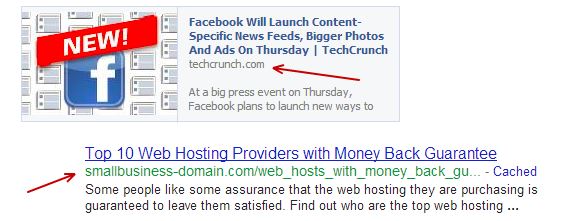
While some marketers think that SEO is only about keywords and links, the reality is that Google likes brands. Google CEO Eric Schmidt once said that “brands are the solution, not the problem. Brands are how you sort out the cesspool. Brand affinity is clearly hard wired. It is so fundamental to human existence that it’s not going away.” The first step to building a brand is choosing a brandable domain.
7 Tips for Choosing A Brandable Domain
What is a brandable domain name? Start with these 7 factors to consider when choosing a brandable domain name.
Pick a .com extension. In most cases, .com is the best choice. This is because .com is the standard, the norm. Most users assume that a company’s website will end with .com; after all, 75% of all websites have a .com extension.
Be memorable. Users must be able to easily remember your domain name/brand. As Ashley Friedlein, CEO and Co-founder of Econsultancy, said, “Brand is the sum total of how someone perceives a particular organization.” You can only have a lasting influence on how people perceive you if they actually remember you.
Be relevant. Words have implicit meanings and connotations; do a little research to ensure that your domain name communicates your desired message. Here is a quick and easy way to test a domain name: go to Amazon Mechanical Turk and run a survey with at least 100 people. Just provide your domain name (nothing else) and ask users to guess the purpose of the company. The responses you receive should provide valuable insight into any implicit meanings your domain may connote.
Easy to spell. Your domain name must be easy to spell. Avoid commonly misspelled words, intentional misspellings and hyphens. If you purchase a domain name with numerals (eg 1widget.com), also purchase the domain name with the number spelled out (eg onewidget.com). Popular bookmarking site Delicious actually had to change its domain name because so many users had difficulties remembering how to spell it.
Sound authoritative. Your domain name should sound like a trustworthy authority. As this research brief puts it, users “demonstrate a clear preference now for credibility and trustworthiness in a domain name.” Remember Margaret Thatcher’s advice: “Being powerful is like being a lady. If you have to tell people you are, you aren’t.” Avoid choosing a domain such as bestwidget.com.
Shorter is better. Keep your domain name short; 1 or 2 words is best. The top 100,000 websites, on average, have 9 characters in their domain names.
Be unique. One of your marketing goals should be to build a distinct brand that stands out from your competitors. Start by choosing a unique and distinctive domain name. Names like YourDiscountInsuranceStore.com sound generic and unremarkable compared to names such as Google.com, Yahoo.com and Zazzle.com which sound unique.
How To Find A Great Domain Name
Choosing a domain name can be hard. In many cases the most obvious brandable domain names are already registered and would be expensive to purchase. Set up a brainstorm session with your team to develop a few ideas. If it helps, use these three formulas to brainstorm possible domain names.
- Use existing words. Amazon.com and VitaminShoppe.com are good examples of domain names that were created using existing words. Use a thesaurus to find words that may not readily come to mind.
- Create new words. Many famous websites are based on new words (or words that were so obscure that few people knew them). Examples include Google.com, Bing.com or Quora.com.
- Create portmanteaus. A portmanteau is a combination of two (or more) words or morphemes and their definitions to create one new word, like Groupon or Pinterest.


