Showing posts with label Social Media Marketing Strategy. Show all posts

Sunday, 19 May 2013

What makes Coca-Cola the No-1 SuperBrand in Social Media?


Who else has completed more than 80 years of Olympic Partnership with largest-ever activation? Which brand has ever covered more than 275,000 miles across 186 countries in 365 days? Who gets the credit for activating a campaign that made fan cast nearly 910,000 votes, almost 7.3 million sabotages and accounted for virtually 3 million YouTube views?

cocacola1

Yes! You have guessed it right; Coca-Cola is the name that has registered millions of fan engagements. Coca-Cola leads all brands across the world in terms of social media impressions. This food and beverage MNC alone accounts for nearly 14% of the 10.6 billion impressions generated by the top 100 consumer brands, if survey reports by a credible source are to be believed. What makes it the #1 Brand in Social Media is a talisman in itself, an exemplary execution of social media marketing strategies to drive higher sales and tighter community involvement. Social media around the globe is filled with mentions of this brand. Coca-Cola is mentioned in over 9,500 blogs, 270 Facebook pages and around 1500 times on Twitter to recipe a powerful social media presence.

The mentions are generally about what’s going around in Coca-Cola with certain facts and its history. Over the years, this company has built a formidable follower base that responds to posts, tweets and blogs daily for optimum engagement.  You may ask that several other companies enjoy strong social media presence then why only Coca-Cola leads the chart?  Well read along to find what makes Coca-Cola the No-1 SuperBrand in Social Media.

Expertise to Engage

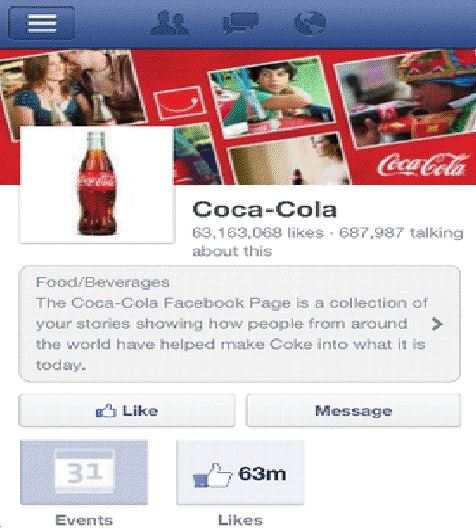
On Facebook Coca-Cola has around 62790856 likes with over 710909 talking about it and 400,000 followers on Twitter. The unyielding focus of this food and beverage giant on reaching people all around the globe via social media networks have accounted for such startling figures. Most of the campaigns for Coca-Cola are owned by fans and enthusiastic advocates of the brand. The posts on Facebook and Twitter are conversational, engaging and rarely have a promotional feel. In short, they know how to engage their audience. Their Facebook page is mostly run by fans and their opinions, videos, stories and photos are regularly updated for optimal community engagement.

Engagement Means More than Sales
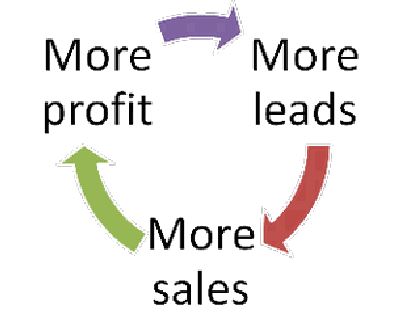
 more profit more leads

Is Coca-Cola earnest about its social media marketing? Yes! It is without doubt. Detailed study of recent social media trends through well-defined monitoring programs for better consumer-behavior insights and active participation has always been the basics of Coca-Cola’s blogs. The comments, queries and other feedback are highly valued and answered as soon as possible. Its social media strategy stands on the pillars of review, respond, record and redirect.

Again, small mention on the blogs breaks the ice to which followers respond and comments influx from all around the world. Coca-Cola’s highly imaginative approach of developing and uploading images, blogs, video vignettes and other meaningful applications make its blogs a wonder-house for social media marketing and engagement.

 Coca-Cola understands that Social Media marketing is more about community engagement than advertising as loyalty means more than sale. The art lies in understanding “What a Brand Stands For” and accordingly creating its personality on the social media promoting it across a variety of media. Even for a super brand like Coca-Cola continual quest to find new ways to engage fans is a must or else its stardom will quickly wear off.

Email : naturalseosolution@gmail.com | Mo : 8763723377 | Skype : sunmoon.mohanty

Tuesday, 14 May 2013

How Your Domain Name Will Impact SEO & Social Media Marketing

When starting a new website, one of the first and most important decisions you have to make is choosing a domain name. That choice will impact the website’s success in nearly every area, included search engine optimization (SEO) and social media marketing (SMM). Let’s examine how a domain name impacts SEO and SMM and then analyze the factors that make a good domain name.

Should I Choose A Keyword Domain?

For years SEOs and Search marketers have often purchased domains that contained their targeted keywords in order to increase CTRs and to help gain higher rankings on Google, Yahoo and other search engines. Let’s examine this strategy to determine if it is still effective.

Many SEO strategists would purchase exact match domains (EMDs), which are domains that exactly match the keyword phrase they are targeting. For example, if they want to rank for “buy green widgets” the person might purchase BuyGreenWidgets.com. EMDs offered two advantages.
  1. The presence of the keyword phrase in the domain was itself a ranking factor.
  2. The presence of the keyword phrase in the domain encouraged other webmasters to include
  3. The keyword phrase in the anchor text when linking to the site.
However, in light of recent Google updates (especially the “EMD update”), EMDs are no longer as helpful as they once were.
  • High Position’s study indicated that the “average EMD ranking went from #13.4 down to #26.6,” and the “average top 10 EMD went from #3.2 down to #11.9.”
  • SEOmoz data shows that EMD correlation with ranking has dropped from 0.34 in 2010 to 0.18 in 2012.
In light of the trend since 2010, many SEOs feel that EMDs and other keyword domains may become even less beneficial in the future. This does not mean that you should necessarily avoid or abandon keyword domains, but it does mean that keywords shouldn’t be the primary factor you consider when choosing a domain.

Keyword Domains For Increased CTR

In some cases, owning a premium keyword domain can increase click-through rates on ads and SERP listings:
  • A study published by Memorable Domains found that “ads featuring a generic domain name with an exact match to the product (ElectricBicycles.co.uk) performed significantly better than identical ads featuring an alternative generic (YourBikes.co.uk) or non-generic (InAHurry.co.uk) domain.” It is worth noting that YourBikes.co.uk looks very generic, and InAHurry.co.uk doesn’t appear to be relevant to the query. Sorry does this support the EMD or premium domain?
  • A study titled “How generic domain names impact SEM campaigns” shows that ads with the display URL DivorceLawyer.com achieved a 298% higher CTR than ads with the display URL VladimirLaw.com. However, this study was only based on 34 clicks, which is not enough data to accurately measure the performance difference.Sorry does this support premium domain or EMD?
  • Does the CTR advantage make buying a premium keyword domain a smart choice?
Consider these factors:
  • What is the search volume? Use Google’s keyword tool to find the exact match search volume for the keyword phrase the domain matches.
  • What is the cost? Most premium keyword domains are already registered and are difficult to obtain (read very expensive).
  • Is it a .com? For example, a keyword.info domain will be far less valuable than a keyword.com domain.
What Is More Important Than Keywords? Choosing A Brandable Domain

Having a domain name that matches your target keyword(s) does offer some benefits, but there is a bigger factor you should consider: the brandability of the domain.

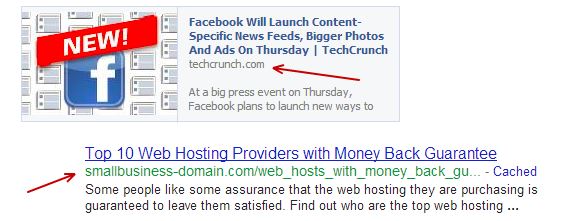
Your brand is important, and your domain name is the foundation upon which your online brand will be built. Your domain name is how users will find, remember, share and identify your company online. In both social media and search engines, the domain name is the primary way by which users can identify to “whom” the link will lead.

facebook

While some marketers think that SEO is only about keywords and links, the reality is that Google likes brands. Google CEO Eric Schmidt once said that “brands are the solution, not the problem. Brands are how you sort out the cesspool. Brand affinity is clearly hard wired. It is so fundamental to human existence that it’s not going away.” The first step to building a brand is choosing a brandable domain.

7 Tips for Choosing A Brandable Domain

What is a brandable domain name? Start with these 7 factors to consider when choosing a brandable domain name.

Pick a .com extension. In most cases, .com is the best choice. This is because .com is the standard, the norm. Most users assume that a company’s website will end with .com; after all, 75% of all websites have a .com extension.

Be memorable. Users must be able to easily remember your domain name/brand. As Ashley Friedlein, CEO and Co-founder of Econsultancy, said, “Brand is the sum total of how someone perceives a particular organization.” You can only have a lasting influence on how people perceive you if they actually remember you.

Be relevant. Words have implicit meanings and connotations; do a little research to ensure that your domain name communicates your desired message. Here is a quick and easy way to test a domain name: go to Amazon Mechanical Turk and run a survey with at least 100 people. Just provide your domain name (nothing else) and ask users to guess the purpose of the company. The responses you receive should provide valuable insight into any implicit meanings your domain may connote.

Easy to spell. Your domain name must be easy to spell. Avoid commonly misspelled words, intentional misspellings and hyphens. If you purchase a domain name with numerals (eg 1widget.com), also purchase the domain name with the number spelled out (eg onewidget.com). Popular bookmarking site Delicious actually had to change its domain name because so many users had difficulties remembering how to spell it.

Sound authoritative. Your domain name should sound like a trustworthy authority. As this research brief puts it, users “demonstrate a clear preference now for credibility and trustworthiness in a domain name.” Remember Margaret Thatcher’s advice: “Being powerful is like being a lady. If you have to tell people you are, you aren’t.” Avoid choosing a domain such as bestwidget.com.

Shorter is better. Keep your domain name short; 1 or 2 words is best. The top 100,000 websites, on average, have 9 characters in their domain names.

Be unique. One of your marketing goals should be to build a distinct brand that stands out from your competitors. Start by choosing a unique and distinctive domain name. Names like YourDiscountInsuranceStore.com sound generic and unremarkable compared to names such as Google.com, Yahoo.com and Zazzle.com which sound unique.

How To Find A Great Domain Name

Choosing a domain name can be hard. In many cases the most obvious brandable domain names are already registered and would be expensive to purchase. Set up a brainstorm session with your team to develop a few ideas. If it helps, use these three formulas to brainstorm possible domain names.
  1. Use existing words. Amazon.com and VitaminShoppe.com are good examples of domain names that were created using existing words. Use a thesaurus to find words that may not readily come to mind.
  2. Create new words. Many famous websites are based on new words (or words that were so obscure that few people knew them). Examples include Google.com, Bing.com or Quora.com.
  3. Create portmanteaus. A portmanteau is a combination of two (or more) words or morphemes and their definitions to create one new word, like Groupon or Pinterest.
If you want more help brainstorming domain ideas, read this article on Ten Tools for Picking the Right Domain Name.


Email : naturalseosolution@gmail.com | Mo : 8763723377 | Skype : sunmoon.mohanty

Monday, 13 May 2013

Free Ways To Reach More People On Facebook


Yes it's FREE
It’s been interesting to see the increase in social media ad spending as of late. A recent study based on a survey of over 500 online marketing and media professionals throughout the U.S. revealed that 64% of them planned to increase social media spending by as much as 10%!
With over 650 million daily active Facebook users as of March, 2013, which is a 26% increase year-over-year, this budget increase makes some sense.
However, while Facebook offers Insights to help monitor progress, there seems to be this sort of metric morass that has left many in the industry wondering about the effectiveness of social media ads – not to mention siphoning money into social media campaigns curtails other marketing channels.
Truth is, you don’t have to spend money to reach more people. Facebook’s EdgeRank, aka their News Feed algo, confirms that. You can increase your social media presence simply by sharing the right kind of text, photos and videos.
Here are a few ways you can reach more people on Facebook without spending a single dollar.

Edge Rank

People spend the majority of their time now browsing through their News Feeds. EdgeRank is Facebooks way of determining if the content you share is worthy of being put on your friends’ News Feeds. Basically there are three key ingredients at work here: Affinity, Weight and Time.
  • Affinity: a measurement of the relationship between the viewing user and the creator. The closer that relationship is, the higher the EdgeRank.
  • Weight: a measurement of the type of post (text, photo(s), video) and how engaging it is. In addition, the more interactions the post has, the more weight it carries. Facebook pours over rich media like photos and videos because they have proven to keep visitorson site.
  • Time: a measurement of freshness. Be consistent in your posting and time will ever be in your favor. EdgeRank says in with the new and out with the old.

Short & Sweet

If you can’t say it in 250 characters or less, you’re shooting yourself in the foot because your posts won’t get as much interactions. Think about it. Facebookers have a lot of posts to rifle through and only a limited amount of time before they get wrangled out of the digital world and have to resume real life. 

Stay Relevant

Avoid venturing off on unrelated topics like politics and religion if they aren’t relevant to your audience. Nobody likes a lousy pitch. If it’s not up their alley, they’ll lose interest. Target your audience and appeal to them by throwing perfect strikes every chance you get.

CONsisTENT Is King

Developing and implementing a consistent posting strategy will keep people interested because they’ll be reminded of your brand and be able to get the information they need from you! I think of it like a TV show, when it’s being aired each and every week, more people are aware and participate. Between seasons however, when it’s not aired, is when people lose interest and go to your competition. You’ll reach more people and keep more tuned in by maintaining a consistent schedule.

Know Your Audience

You can learn a lot about your audience by analyzing your traffic. When does your site get the most visits? What times of day, what days of the week? Use this data to deduce when your audience is present and most active and schedule posts for those times. I went ice fishing once with a fish finder and it changed my whole experience. Your website, given that you have sufficient traffic to analyze, is your fish finder!

In Summary

For those who toss and turn over the effectiveness of Facebook ads, consider these suggestions the next time you share a post. If you’re consistent, I believe you’ll see significant increases in your online presence on Facebook. When you don’t have to spend any money, you can expect a pretty good ROI! I can definitely see these suggestions working on other social media platforms too. Do you?
Email : naturalseosolution@gmail.com | Mo : 8763723377 | Skype : sunmoon.mohanty

Wednesday, 8 May 2013

Can Social Media be Your Primary Marketing Strategy?


It is no secret that social media is turning into quite the process. It’s becoming more and more important, so many different tools and advice columns keep popping up to help businesses and individuals stay organized and successful when it comes to this newer marketing effort. This has caused many companies to create a full-time social media position for experts to help manage the many social accounts, follow analytics, get creative with engagement, etc. It takes a lot of time and effort, but the payoff is only increasing as social involvement increase, so it’s easy to ask yourself: Can I get away with making my social media strategy my primary marketing strategy?

The Defense: A Case for a Social Media Marketing Strategy

No matter what your reasons are for putting all of your energy and resources into social media marketing, most are always thinking about the scenarios in which this idea might actually work. Below are a few instances where this strategy could potentially show success:
  • If you have a very small budget. 
Those who ask this question are typically small businesses on a budget, and rightfully so. Social media is one of the most inexpensive ways to get the word out there about your business. Although a company may have to pay an expert or a team of experts to make it happen (after all, if this is your primary method you want to be present on every single account from StumbleUpon to Quora to Slideshare), that’s the price that you pay for any marketing efforts you adopt. The only difference here, however, is that this will likely still be the least expensive.
  • If your company targets an audience that is very active on social media.
While you might miss out on opportunities by neglecting other marketing strategies, you can still earn success (and save money) if you know that most of your audience is active on social media. If you have done enough research to know that your product or service resonates well with this age group, and you know that some of your past clients and customers found you on social media or find other companies via social media, you have yourself a good outlet.
  • It can be targeted and easy to find analytics.
Social media is easy to target because social networks have so much specific information about its users (most of this information voluntarily given to the networks by the users). When it comes to buying ad space on a site like Facebook, you can make sure that you’re targeting to those in your audience the same way you would with buying ad space on a search engine like Google (this is a huge advantage for companies that have found the first two points to be true; otherwise you might be better off with Google). Most of the major social networks such as Facebook and Google+ also have built in analytics to help you determine which posts are getting the post traction and the demographics of those in your network.

The Prosecution: Why Even A Small Business Needs More than Social Media Marketing

The prosecution has tons of statistics on its side. A few reasons why you might need more than just a social strategy include:
  • Plain and simple, more visitors come from search than social media.
According to a previous Search Engine Journal post, a study by Outbrain showed that search is the number 1 driver of traffic to content sites, beating social media by more than 300 percent. Every site needs traffic, and it seems that search is the place to really find it.
  • It isn’t as successful when it comes to conversions.
Social media is wonderful for visibility and engagement, but it’s harder to draw leads from social media as opposed to SEO. People use social media to socialize, but they use search to discover new things at a time when they are ready.  A Search Engine Watch article details a study that surveys users about when they use search and when they use social to gain information, and the only time social prevailed was when talking about “discussion.

The Verdict: A primary strategy works well, but it rarely works as your only strategy.

So this might seem like a lazy answer, but let me explain. Social media can be your primary marketing strategy, but it’s best to think of it only as the primary strategy for certain things. For example, it might very well be your primary marketing strategy for building your individual brand. It might very well be your primary strategy as a startup looking to save money. It might be your primary strategy when you are targeting a younger demographic (which might be the majority of the time). It’s all about what you’re focusing on at a given moment.

So what about social media marketing being your only strategy? It seems as though it would work in certain instances, but you simply can’t discount the fact that your business is going to change and have more needs as it develops. In other words, social media marketing can definitely be an overall primary strategy for some, but it shouldn’t be the only strategy used to sell your product or service. The prosecution wins this one, but not by a lot.

Do you think that a business could be successful if they employed social media marketing as their primary way to market the company? Are you a business that has succeeded or failed when attempting this idea? Let us know your story and your thoughts in the comments below.

naturalseosolution@gmail.com | Mo : 8763723377 | Skype : sunmoon.mohanty