Thursday, 11 July 2013

How Google Will Destroy Facebook in 2013

facebook_error

Perhaps two of the largest entities in cyberspace, Google and Facebook, have been waging their own digital turf wars – albeit not always directly with each other – throughout the past several years.
By taking an in-depth look at the interaction between these two powerhouse players, as we will in this article, it becomes clear that Google will prevail, and quite decidedly at that. Facebook’s death will be slow and painful, causing the majority of grief to its nearly 1 billion users along the way.
However, while Google will likely endure the blame for crushing Facebook in the coming year, the social behemoth’s demise will actually come at the hand of marketing communities across the internet. I’ll explain why throughout this article.
Marketers Follow the Masses
This is one thing that has always been true and will continue to stay true, even throughout the deluge of technological advancements yet to come.lightspeed briefs  Marketing is a constant pursuit to promote messaging in front of as many eyeballs as possible, hopefully maximizing exposure at the lowest possible cost.
For most of us in this digital age, that means we can expect to see ads just about everywhere we look. It’s getting so pervasive that I sometimes wonder how long it will take before the first ‘in-dream ads’ are being broadcast.
According to Futurama, that’ll happen before long, as we know from Fry’s ‘Lightspeed Briefs’ sponsored dream sequence.
But for now, while the secrets of telepathic advertising remain a mystery, marketers have to settle for densely populated regions of the web, namely Facebook and Google. Unfortunately, the majority of advertising we encounter daily is what we lovingly refer to as ‘spam’. It’s important, however, that we all recognize the tenacity of marketers to leverage our favorite hangouts for business promotion.
The Holy Google Grail – Chasing the Top Spot in Search
With a realistic understanding of the aggressiveness of digital marketing in our most frequented hotspots, it’s no surprise that the highly coveted number one spot on Google’s search results is akin to the Holy Grail of web marketing for businesses.
We made a snazzy infographic to better convey why that top spot is so attractive:
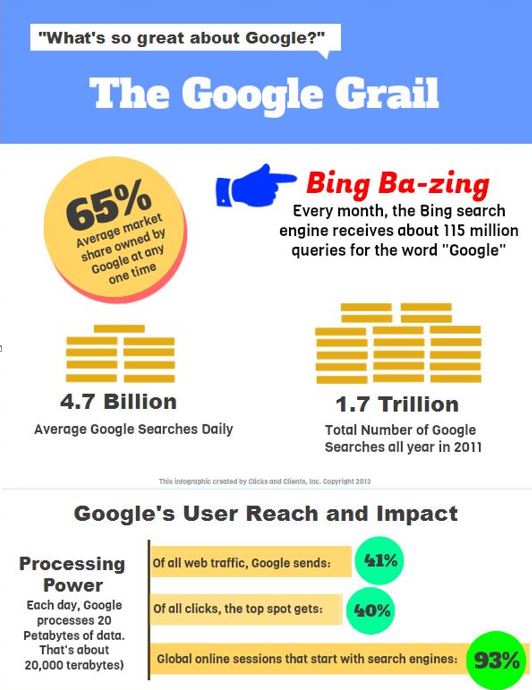
the google grail infographic
On top of all those ‘no-brainer’ stats, there’s no cost for being listed in organic Google search results. Simply put, Google offers the highest possible exposure opportunity for the lowest possible price.
A Matter of Factors
It’s pretty clear how valuable it is to secure top positioning in Google, so let’s look at how search marketers pursue that prized placement in the Search Engine Result Pages (or “SERPs”).
Google has various ways of measuring whether a given website should rank highly or not. These criteria are ‘Ranking Factors’, and some factors are given more weight than others in determining a site’s ranking in search results.
The goal of SEOs and web marketers is therefore encompassed in a constant pursuit to optimize a website’s Google ranking factors, in hopes the almighty search giant will grant them favor when placing the result in the SERPs. The better your ranking factors, the higher you’ll be on the page.
Facebook as a Ranking Factor
Now we reach the catalyst of the scenario – the key component bringing about this clash of titans. We’re talking about the notion that Facebook content, from web links to number of “Likes”, is considered a ranking factor in Google’s search result placements.
This is quite the hot topic in the digital marketing realm as of late, and there’s no shortage of posts on the subject. But regardless of all the speculation, rumor, expert advice and data digging; it’s important to take into account a couple of key facts about our industry:
  1. “Social Signals” are often mistakenly interchanged with “Ranking Factors”, although these are actually two completely different things.
  2. Google provides only minimal guidance for search marketing communities, leaving us to rely on our own industry community for developing strategies and best practices. The drawback to this is a lot of misinformation and widespread consensus of concepts that simply aren’t true.
With conditions like these, the actual facts about how Google treats Facebook-based ranking factors start to become less important because consensus (even if it’s false) about something this big spreads quickly throughout the online marketing realm.
At this point, we see some fracturing in the community. While a few small pockets of skeptics refuse to believe in Facebook ranking factors, the vast majority of the community adopts – and spreads – the notion as true. This includes myriad inexperienced marketers who simply still haven’t learned how to separate fact from fiction while researching the trade.
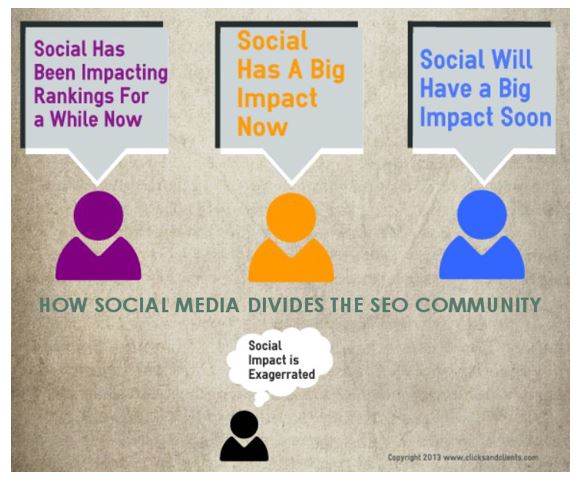
how social media divides the seo community
The Correlation Conundrum
As explained earlier, search marketers simply don’t have enough evidence from Google that clearly defines Facebook signals as ranking factors for websites. Instead, the community relies heavily on correlations found through data analysis.
Remember that small pocket of fact-reliant skeptics I mentioned earlier? This is the part where they’re all ranting that “Correlation is not causation!”
And they’re exactly right. All of that correlative data is great for making some decent speculative deductions, but does not represent definitive evidence regarding Google’s infusion of Facebook signals into a website’s ranking factors.
There are tons of articles and web pages dedicated to this subject, complete with extensive research and seemingly actionable conclusions.
Some of the most authoritative web marketing and SEO resources on the web have published findings that show compelling correlations between social signals and a website’s search engine performance.
Perhaps the best example is this graph, originally published on Search Metrics last year:
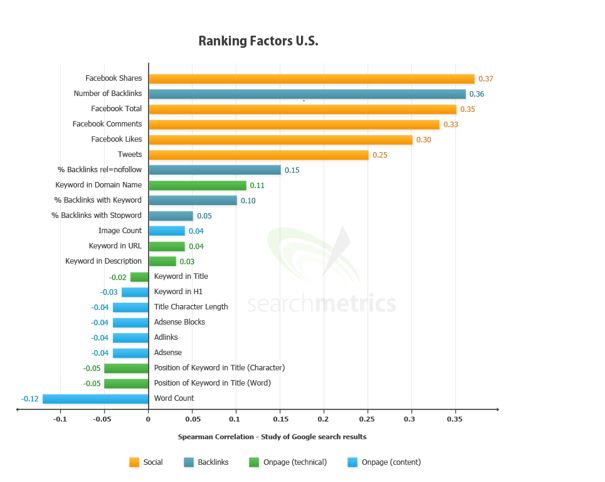
us ranking factors
This graph has started popping up on blogs and marketing resources all over the web, largely used as a support reference for similar claims that Facebook impacts Google rankings significantly.
It’s no wonder, really. Even at first glance, anyone just browsing by will likely arrive at the same conclusion based on this illustration: Facebook signals have become gigantic ranking factors in SEO.
The flames are fanned even more when videos like this one pop up offering precious evidence, supposedly straight from Google (some of it even ‘leaked’), that defines the fabled search-social connection. It’s entirely possible that, after seeing videos like this, an entire swath of the internet marketing community will buy in on the spot.
But these seemingly groundbreaking details still aren’t converting the seasoned skeptics, who find it all too easy to poke plenty of holes in the story.
So what are the actual facts? While the context of the source article at Search Metrics explains that the data shown in this graph is all correlative, plenty of marketers will adopt this data as proof of Facebook’s huge impact on Google’s website rank factoring.
Same thing with the ‘proof leaked’ video – perhaps even more so, due to the implication that the information is backed by the big G itself.
So in summation, the take-away here is that we’ve passed up the point where Google’s confirmation of Facebook’s impact on ranking actually matters. The pervasive amount of correlative data being continuously generated within the marketing community simply overshadows the hard facts.
Granted, while all of these correlations can’t replace Google’s official explanation of exactly how they use Facebook in website rankings, they sure seem convincing.
So, to be fair, we still have to ask: What if these correlations really do mean that Facebook has the strong influence they imply? At this point, it honestly doesn’t matter because the vast majority of marketers will act on it regardless.
Digital Marketing Mayhem
Because the internet essentially levels the playing field for businesses by affording relatively equal opportunity exposure for everyone regardless of size and capital, the online space is the most populated, competitive realm in the world.
It’s also constantly changing (thanks in no small part to Google). Digital marketing has become a burgeoning industry of its own, with an equally competitive agenda as the clients they serve. In the past decade, we’ve seen – and continue to see – how ‘spammy’ web marketers swarm through the web in hasty, aggressive attempts to exploit the latest trends. Let’s look at a few examples:
  • Reciprocal linking (link exchanges)
  • Link Farms and Content Farms
  • On-Page Keyword stuffing
  • Mass email spam marketing
  • Affiliate & Referral marketing
  • Mass directory listings
  • Anchor text link spam
Still today, some of these more recently adopted tactics are still spreading throughout the worldwide web liberally. We can even still see the remnants of older marketing methods, long-known to be ‘dead’, floating around cyberspace like fossilized, spammy eyesores.
It’s likely, then, that the idiom about history always repeating itself will hold true with Facebook as marketers gravitate toward the apparent Google-boosting boon. The first subtle signs are already appearing, as a more aggressive business presence on the social network has recently risen.
Cause of Death is Two-Fold
The death of Facebook won’t be quick and painless. It’ll be an agonizing, slow and steady decline into oblivion, with a ravenous horde of spammers laying claim to the land. It will likely occur over two stages.
The first stage is a rapid growth spike in users (mostly marketers and spam accounts), followed by a plunge in population as users are driven away by a deluge of advertising (both from Facebook promotion and independent campaigns). Consistent privacy concerns and unsettling design reformatting won’t help matters either. We’re currently in the midst of that growth spike now, effectively lighting the fuse for the impending explosion.
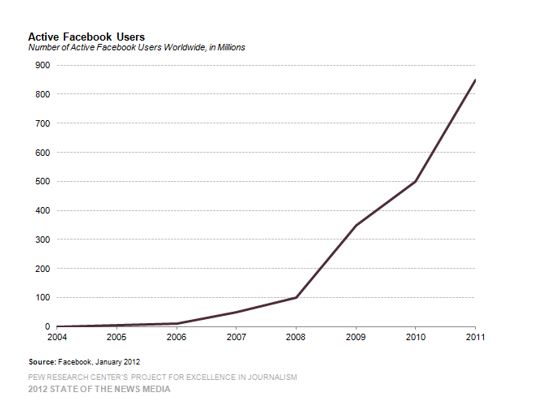
active facebook users
Strong data correlations exist between this spike in active users (as shown in State of the Media’s graph above) and the increased prevalence of content on the web that cites Google’s use of Facebook signals as ranking factors. As the correlations mount, so does the marketing on Facebook.
Viral trends are the inherent nature of Facebook, with content and user behavior largely influenced through a chain reaction of consensus. That rule is no different in terms of members jumping ship.  Just as quickly as they grew, Facebook’s ranks will disperse.
Having grown frustrated of the incessant marketing and Facebook’s weakening privacy controls, the user base will teeter over the tipping point and the drop in population will trigger the second stage of Facebook’s demise.
Facebook will join the marketing frenzy and attempt to recover losses (including those to their stock prices) through increased monetization efforts as organic users flee the social network en masse. Expect to see a lot more Facebook-sourced advertising, page promotion campaigns and other marketing efforts. These actions are strictly a last resort at easing the pain of death and will ultimately serve to alienate the remnant user base as they, too , finally trickle out.
Web: www.sunmoonsolutions.in | Email: sunmoonsolutions@gmail.com | Skype: sunmoonsolutions 

Google Just Released Remarketing Lists For Search Ads (RLSA)

Google Just Released Remarketing Lists For Search Ads (RLSA)

Google has been a lot of fun lately! Earlier this week they launched dynamic remarketing and now they’ve added remarketing lists for search ads, otherwise known as RLSA. Have you tested out the new dynamic remarketing yet?
RLSA isn’t new, it’s been in beta since July. When Google takes something out of beta, it’s always fun because you know there will be some case studies to read.  First, let’s talk about what RLSA will do for you. It will allow you to modify your bids, keywords, and search ads based on past activity a visitor has had with your website. Creepy or not, we can all agree with how powerful this will be!
Successful beta stories
  1. WorldStores increased their bids for past site visitors and that led to an increase of total orders by 8% with RLSA. Additionally, their conversion rates were 130% higher than normal. Despite having higher bids, they still experienced a 43% reduction in average cost per conversion!
  2. Tirendo experienced an increase in their conversion rate by 161%. Their average cost per order decreased by 43% and they had an overall 22% increase in their sales.
How exactly do these remarketing lists for search ads work?
I can see the people over at Google chanting this:  intent, audience, and context! In all seriousness, that’s how these ads are able to be so effective. One thing that I’ve always maintained is that it’s easier to keep a past customer to buy again than to acquire a brand new customer.
You will be able to do the following with RLSA:
  1. Expand your reach with more broad keywords
  2. Adjust your bids to increase the visibility of yours to target your high value customers
Other features of the RLSA update include: the google remarketing tag, list management tools and adjustable ad settings.
Are you excited about remarketing lists for search ads too? What will your success story look like with RLSA?
Web: www.sunmoonsolutions.in | Email: sunmoonsolutions@gmail.com | Skype: sunmoonsolutions 

Five Things Your SEO Consultant Won’t Tell You

Natural Google traffic makes up half of the traffic on the web. The runner up, direct traffic, doesn’t even come close, taking up only a fifth of the web traffic pie. There’s no question that growing your search engine traffic is one of the most promising ways to grow your online business.
But can you trust the people who claim they can grow that traffic source for you?
There are some real paragons in this industry, but if you aren’t careful, you could end up working with somebody that is taking advantage of you, or doesn’t really know what they’re doing. Here are five things a bad SEO consultant won’t tell you about what they do or their industry at large.

1. SEO is not a dark art that only the technical mind can comprehend

I believe all marketers should be data-driven, so technical knowledge of some kind should be amust in any field of marketing. But this isn’t really much truer for SEO than it is for any other field of marketing.
Some SEOs intentionally obfuscate their process and make the whole thing sound like it requires intimate knowledge of computer algorithms, and that they somehow hold the undisclosed secrets of top Google rankings.
Make no mistake, technical knowledge becomes massively important when you start talking about page load time, site architecture, responsive design, and so on. These do have tangential influence on SEO, and if you hire a consultant who can help with these issues you’ll be in much better shape.
Furthermore, an SEO who can design tools for your audience to use is more likely to earn you attention online than one who can’t.
But no SEO has intimate knowledge of exactly how Google’s algorithm works. Even a recently defected Google employee has no idea what the next algorithm update will bring.
All in all, SEO isn’t really a technical skill. Like all marketing, data plays an enormous part, and yes, those with web design experience will be more useful to you. But SEO is primarily about building online relationships and trust, attracting attention, and doing market research.
It’s not about hacking Google.

2. They’re probably violating Google’s guidelines

While SEOs do many things, most of that revolves around one of two central things: choosing keywords and building or attracting backlinks.
According to Google’s own guidelines, “Any links intended to manipulate a site’s ranking in Google search results may be considered part of a link scheme.” While Google more explicitly rules out spam-related techniques like buying links, excessive link trading, building websites just to build links, and using automated programs to build links, this doesn’t mean all other links are safe.
In fact, Google would like to see a web in which every link was given editorially and nobody manually built a link to their own site, ever.
This is never going to happen, but it does mean that any link an SEO consultant builds for you today can be called into question tomorrow.
Any time an SEO builds a link specifically to influence rankings, that “may be considered part of a link scheme.” There’s really no way around it. Most SEOs are violating Google’s guidelines. That’s a risk you need to be aware of.
This is not to say that SEOs should never build links, but it does mean that the practice needs to be approached very carefully. Only links defensible as legitimate marketing are really worth building.
If your SEO consultant is building links that don’t significantly boost brand impressions or send referral traffic, they are setting you up for failure at some point in the future. It’s not that you’ll be penalized for this (unlikely in any non-spam situation). It’s that you’ll essentially lose all the links and end up starting over from scratch.
This might not sound so bad now, but trust us, it’s a very painful process for the clients who have come to us after going through this exact process. Many of them believed that their links were “safe” because they were “hand built” and the content was “quality.” Unfortunately, all of these were just words, because the links still came from sites that had small audiences and lots of spammers. Now they need to rebuild their entire link graph from scratch, and find a way to deal with the huge cash flow disruption they’ve sleepwalked into.
SEOs who don’t take Google’s guidelines seriously and don’t diversify their traffic streams are just building a house of cards.

3. They don’t really know how to go viral

Viral marketing is a big hot button these days, and we’ve spent some time talking about what makes things go viral. I think it’s important to learn what you can about the subject and try to bring at least some viral component to every campaign. At the same time, nobody really knows how to go viral.
Browse the top posts of all time on Reddit and they don’t look particularly different from the stuff that does okay there every day. Look at any piece of viral content or meme and it’s virtually impossible to dissect why it worked instead of one of the many other creative ideas that failed.
We all know the description of a viral piece of content. On average, each person who sees it shares it with more than one other person who will also share it.
Easy to say. Almost impossible to pull off intentionally.
We’ve studied the subject and make an effort to learn from the science of shareability. People are more likely to share a piece of content if it makes them look better, it surprises them, it amuses them, it expands their view of the world, it’s emotional, and it’s actionable. It’s a good idea to work as much of this as you can into each piece of content.
But any marketing strategy built entirely around the concept of “going viral” is doomed to failure.
Just look at every viral video, meme, or piece of content you’ve ever come across. How many of them were put together by marketers?
I thought so.
We tend to focus on going “viral” with a lowercase “v.” It’s better to work on content that tends to get picked up by influencers in a particular niche and shared with their audiences. This is something that can be done consistently and that can be strengthened by relationships. There’s much less luck involved and the audience is far more relevant.
Keep in mind that even genuinely viral content tends to spread only through specific subcultures. Not even “Gangnam Style” got shared by everybody who saw it. There’s always a limit to who you’re willing to share a piece of content with, and the six degrees of separation are a myth.

4. If they’re doing it without you, they’re setting you up for failure

The core goal of any genuine SEO campaign is to establish you as a trusted authority on subjects that matter to your target audience. SEOs are experts in SEO, not your niche. They might not be lying if they claim that they can boost your rankings without you, but any results they can give you will be temporary, and the brand impressions probably aren’t going to be all that positive in the first place.
We’re certainly not saying that SEO doesn’t work unless your employees are the ones who write all the blog posts and build all the links. We’re just saying that if you care about how your customers perceive you and you want your search traffic to last, you’re going to spend a lot of time talking to your SEO consultant, brainstorming with them, advising them on the values you want to portray, defining your unique selling proposition, and so on.
Furthermore, the best SEO campaigns surround something you have done: a newsworthy event, case study, or piece of knowledge that isn’t widely known. Your SEO consultant can advise you on the kinds of newsworthy stunts you can pull off in order to maximize links. They can write blog posts, put together videos, and design infographics in a way that maximizes the exposure you can get from an event. But they can’t turn water into wine.
Online exposure revolves just as much around what you do as what you say. SEOs can only handle the “saying” part. It’s their expertise. But without the added benefit of your expertise, they can’t make you look like an expert.

5. They haven’t tested the validity of anything they say

This is one of the worst offenses.
Much of the SEO industry is run by followers. Don’t get me wrong; there’s nothing wrong with learning from the experts. But marketers who just parrot what leaders in their field talk about are only going to end up sleepwalking into traps, mistakes, and wasted time.
We mentioned before how important it is to be data-driven. You absolutely must put your opinions to the test if you have any desire to maximize results, especially when you put the word “optimizer” in your job title.
SEO is just as much art as science. There’s a lot of guesswork, and intuition plays a crucial role. It’s okay to venture into unexplored territory. That’s what discovery is all about. At the same time, you need to measure results and justify actions. There’s nothing wrong with hunches or beliefs. There is something very wrong with stating hunches and beliefs as facts, then proceeding to act on them indefinitely without testing their validity.
Web: www.sunmoonsolutions.in | Email: sunmoonsolutions@gmail.com | Skype: sunmoonsolutions 

Monday, 24 June 2013

Latest Interview SEO Questions 2013

1. What’s your SEO experience?
2. What do you think about the latest algorithm update from Google?
3. Do you use any SEO tools?
4. Mention some SEO myths you know and what the actual facts are
5. Which industry blogs and sites do you follow?
6. Do you do black hat SEO?
7. Can you tell me the difference between on page and off page SEO?
8. What are your thoughts on buying links, article marketing, article spinning, and directory submissions?
9. What areas do you think are currently the most important in organically ranking a site?
10. Rate from to, tell me the most important “on page” elements
11. Do you currently do SEO on your own sites? Do you operate any blogs? Do you currently do any freelance work and do you plan on continuing it?
12. What are some challenges facing the SEO industry?
13. What areas of SEO do you most enjoy?
14. In what areas of SEO are you strongest?
15. In what areas of SEO are you weakest?
16. Who is Matt Cutts?
17. What's the difference between PageRank and Toolbar PageRank?
18. Why does Google rank Wikipedia for so many topics?
19. What is keyword proximity?
20. What are the types of CSS and which is better for SEO?
21. Can we use more than one H on a single webpage?
22. Some basic and quick steps to increase the webpage speed?
23. What is your opinion for direction of Web technologies regarding SEO?
24. What is sitemaps? And how HTML sitemaps different from XML sitemaps explain?
25. Do you have HTML coding cognition which is very important for on page Seo?

26. What are your key strategies for creating good backlinks?
27. If you get a new website how would you optimize the website explain your various steps?
28. What keyword research tools do you use and why?
29. Latest Social Media Optimization (SMO Interview Questions)
30. What is SMO?
31. What is tumbler?
32. Which is the part of Google?
33. What is Alexa?
34. What experience have you gained of using web tools either in a professional or personal capacity?
35. What are your favorite social media sites?
36. What’s the difference between Social media and social networking?
37. What are the differences between writing for traditional web channels and writing for social media?
38. Why do you think company XYZ should use social media?
39. How can you measure success in social media?
40. Social media-Hope or Hype?
41. How do social media impact SEO?
42. How do you build an audience socially?
43. What is the difference between SEO and SEM?
44. Share your SMO work plan for a New Projects?
45. How much you comfortable with writing for SMO?
46. What are some of the challenges explaining social media to non-technical executives? How do you overcome objections about social media?
47. What are your strengths in social media?
48. What are your weaknesses in social media?
49. Which social bookmarking sites do you use?
50. What social media tools do you use?
51. How do you manage an online reputation? If one of our executives had a bad online reputation (bad press, etchant wanted to fix it, what would you recommend?
52. What areas of social media would you recommend outsourcing?
53. What are the risks with becoming involved in social media?
54. What do you do offline to increase your online knowledge?
Social Media Industry Questions

1. What is Web?
2. What does Web look like?
3. What’s the “next big thing?”
4. What is the difference between social media and social networking?
5. What do you think of social media consultants?
6. What’s the most exciting part of social media?
7. What social media blogs do you read? What research do you follow?
8. Who’s your favorite social media expert?
Social Media Technical Questions

1. Explain the difference between Facebook Like and Sharing on Facebook.
2. If you’re planning a vacation and will be out of touch and not able to get online for a week, what tools would you use to ensure social media updates are being posted?
3. Write three headlines for news stories that you think will have tremendous success on social media
4. What makes the headline successful? Write a headline for a successful article about our company.
5. How often should we update Twitter?
6. How do you handle criticism of a company online?
7. What would you do if someone started a parody account poking fun at our company?
8. What is your policy for moderating comments?
9. Would you pay a blogger to write favorably about our company?
10. How would you show unique content only to fans on our Facebook page?
11. Who in our organization should be blogging on behalf of the company?
12. How would you perform competitive analysis in the social space?
13. What do think about software applications that auto follow or try to get get large masses of friends on social network sites?
14. What do the statistics look like for a healthy Facebook fan page?
15. Explain what a retweet is.
16. What is RSS? Why is it important?
17. Have you ever gotten a piece of content onto the front page of Digg?
18. How frequently do you update Facebook and Twitter?
Social Media Analytics & Marketing Questions

1. How do you measure success on social media?
2. What metrics do you use to measure the effectiveness of social media?
3. How would you tell that a social media campaign has failed?
4. What key performance indicators would you recommend to report on social media efforts?
5. Write down a table of contents for a social media strategy.
6. What elements should go into a social media marketing plan?
7. Why would we want to pay for social media advertising?
8. What are the best types of things to advertise on a social networking site?
9. What analytics software packages have you used?
10. Describe the most successful social media campaign you have ever seen what made it so successful? Could you duplicate that level of success?
11. Describe a social media campaign you ran from start to finish.

12. Provide an example of a social media campaign you are current running Show me what channels it is in Describe the next steps for your campaign.
13. What are the elements that make a video go viral?
14. How will the candidate use social media for the company? Has the candidate reviewed the company’s current social media presence and formed an opinion?
15. For our business, would Twitter or Facebook be more effective?
16. Why would we want to continue using MySpace?
17. Why should we use social media?
18. What would be the first thing you would do if hired for this position? What would your goal be for the first month?
19. Would you use Facebook Like or Facebook Recommend on our site?
20. What social sites should our company have a presence on?
21. How would you integrate social media into our site? What buttons or widgets would you recommend?
22. What percentage of our referral traffic would you think our site should get from social media sites?
23. Give our company a grade on our current social media efforts.
24. How would a social check in site benefit our business?
25. What tabs should we have on our company Facebook page? Which one should be default?
26. How do you define social media reach? What is the current social media reach our of our company?
27. What are things you would recommend to us to do immediately in the social space?
28. What are some of the challenges explaining social media to non-technical executives? How do you overcome objections about social media?
29. If you were working at a firm which blocked employee access to Facebook, Twitter, and other social sites, do you think this is a good policy? If not, how would you
30. Convince the executive team to open up access for employees?
31. What is the difference between moderating something and facilitating something?
32. What are your strengths in social media?
33. What are your weaknesses in social media?
34. Which social bookmarking sites do you use?
35. What social media tools do you use?
36. What is your biggest mistake you’ve made in social media? How did you fix it?
37. Have you ever held a live event in the social space? How would you market a live online event? How would you structure the event?
38. How do you manage an online reputation? If one of our executives had a bad online reputation (bad press, etchant wanted to fix it, what would you recommend?
39. If we had a business crisis, what social media channels would you use to communicate through? How would you manage the messaging?
40. What areas of social media would you recommend outsourcing?
41. What are the risks with becoming involved in social media?
42. Which is the best social check-in site?
43. Are you the mayor of any place?
44. What do you do offline to increase your online knowledge? (Hat tip: Brian Boyd)
45. Social Media Industry Questions
46. In this section of the interview, you will learn how involved the candidate is in the industry Is he/she looking for a job or a career?
47. What does Web look like?
48. What’s the “next big thing?”
49. What is the difference between social media and social networking?
50. What do you think of social media consultants?
51. What’s the scariest part of social media?
52. What’s the most exciting part of social media?
53. What social media blogs do you read? What research do you follow?
54. Who’s your favorite social media expert?
55. Social Media Technical Questions
56. How much of the underlying social media technology does the candidate understand? These questions determine the level of technical knowledge of the candidate.
57. Explain the difference between Facebook Like and Sharing on Facebook.
58. If you’re planning a vacation and will be out of touch and not able to get online for a week, what tools would you use to ensure social media updates are being posted?
59. Write three headlines for news stories that you think will have tremendous success on social media?
60. What makes the headline successful? Write a headline for a successful article about our company?
61. How often should we update Twitter?
62. How do you handle criticism of a company online?
63. What would you do if someone started a parody account poking fun at our company?
64. What is your policy for moderating comments?
65. Would you pay a blogger to write favorably about our company?
66. How would you show unique content only to fans on our Facebook page?
67. Who in our organization should be blogging on behalf of the company?
68. What is a “sneezer”?
69. How would you perform competitive analysis in the social space?
70. What do think about software applications that auto follow or try to get large masses of friends on social network sites?
71. What do the statistics look like for a healthy Facebook fan page?
72. Explain what a retweet is.
73. What is RSS? Why is it important?
74. Have you ever gotten a piece of content onto the front page of Digg?
75. How frequently do you update Facebook and Twitter?
76. Social Media Analytics & Marketing Questions
77. A good portion of social media is marketing related Does the candidate understand these marketing elements and the tactics necessary to apply them to social media?
78. How do you measure success on social media?
79. What metrics do you use to measure the effectiveness of social media?
80. How would you tell that a social media campaign has failed?
81. What key performance indicators would you recommend to report on social media efforts?
82. Write down a table of contents for a social media strategy.
83. What elements should go into a social media marketing plan?
84. Why would we want to pay for social media advertising?
85. What are the best types of things to advertise on a social networking site?
86. What analytics software packages have you used?
87. Describe the most successful social media campaign you have ever seen what made it so successful? Could you duplicate that level of success?
88. Describe a social media campaign you ran from start to finish.
89. Provide an example of a social media campaign you are current running Show me what channels it is in Describe the next steps for your campaign.
90. What are the elements that make a video go viral?
91. How will the candidate use social media for the company? Has the candidate reviewed the company’s current social media presence and formed an opinion?
92. For our business, would Twitter or Facebook be more effective?
93. Why would we want to continue using MySpace?
94. Why should we use social media?
95. What would be the first thing you would do if hired for this position? What would your goal be for the first month? The first year?
96. Would you use Facebook Like or Facebook Recommend on our site?
97. What social sites should our company have a presence on?
98. How would you integrate social media into our site? What buttons or widgets would you recommend?
99. What percentage of our referral traffic would you think our site should get from social media sites?
100. Give our company a grade on our current social media efforts.
101. How would a social check in site benefit our business?
102. What tabs should we have on our company Facebook page? Which one should be default?
103. How do you define social media reach? What is the current social media reach our of our company?
104. What are things you would recommend to us to do immediately in the social space?
Common interview questions

1. Tell me something about you?
2. Describe your greatest strengths?
3. Tell me the reason why you quit your previous job?
4. Tell me your career goals in work?
5. Why do you choose this job in our company?
6. Tell me your biggest weakness?
7. Are you interested in any other jobs?
8. Tell me your knowledge of our company?
9. What is your expected salary?
10. Why do you think that you are the most suitable candidate?
Social media strategies

1. Which kind of social media should we use in your point of view?
2. What do you do to find target customers on Facebook?
3. Why should we use social media? Give me the reason?
4. Do we have to be pay attention to anything when we use these tools?
5. Describe the risks that we can face when using them?
6. Who takes responsibility of them?
7. What would you do to control relevant resource?
8. Do you think some of the work should be outsourced?
Social media experience

1. Describe your experience of designing a video?
2. Tell me the experience that you have collected from using web tools in professional as well as in your personal business?
3. Which challenges have you met when you used social media in your last job and what did you do to win them?
4. The IT world has a lot of free social media tools which criterions have you based on to evaluate a tool whether it is suitable for professional use?
5. Sometimes, social media is unable to support for brands give me an example in which your on-line performance hasn’t satisfied you as you expected and what did you do to deal with it?
6. Have you ever had to write a training, guidance or strategy document about social media and what did you do to complete this assignment?
General Social Media Questions

1. Describe some difficulties that you faced when you explained social media to executives who knew nothing about it? What do you do to deal with such objections?
2. Describe your strengths in social media area?
3. Tell me your weakness in social media?
4. Tell me the social bookmarking sites you often use?
5. Tell me the names of social media tools that you use?
6. What do you do to control the spread of social media? What would you advise your executive if he had a trouble with social network (bad press, etchant wanted to cover it?
7. Which parts of social media would you suggest to be outsourced?
8. Describe some risks related to social media?
9. How do you do to improve your online knowledge?
Social Media Field Questions

1. Define SEO?
2. What are our opinions of Facebook fan page?
3. Could you define Web?
4. Describe Web.
5. Do you know what “next big thing” is?
6. Describe the difference between social networking and social media?
7. What is the role of social media advisers?
8. Tell me which part of social media is the most interesting?
9. Give me the names of the social media blogs you often read? What do you search on them?
10. Who do you admire most in social media field?
Social Media Technical Questions

1. What should you do to attract visitors to see a clip?
2. Describe how you set up a channel on Youtube?
3. What is the difference between Sharing on Facebook and Facebook Like?
4. Which tools will you use to update social media if you are on a holiday and unable to keep in touch with social media for a week time?
5. Create resounding success on social media by writing three headlines for news which brings success to the headline? Write an attractive headline for article of our company.
6. How often do we need to have Twitter updated?
7. What do you do to deal with criticism of an online company?
8. How do you react in case someone creates a ridiculous account to laugh at our company?
9. What do you do to manage comments?
10. Will you accept to pay someone to praise our company online?
11. What do you do to have the exclusive content shown on our Facebook page and only to fans?
12. Do you know anyone in our company should be blogging on behalf of the organization?
13. Describe the way you implement the competitive analysis in the social media?
14. Tell me your opinion about software applications that follow automatically or try to collect a big number of friends on social network sites?
15. Describe statistics for a fresh Facebook fan page?
16. Could you define the re-tweet?
17. Tell me your knowledge of RSS? Describe the importance of it?
18. Have you ever had any contents appeared onto the front page of Digg?
19. Do you often have your Facebook and Twitter updated?
20. Tell me the ways you use to manage your Facebook group?
21. What do you do to manage a Facebook fan page well?
Social media analytic

1. Tell me the acceptable reason to pay for advertisement on social media?
2. Which types of advertisement are the best on a social networking site?
3. Tell me the analytic software packages that you have used?
4. Which social media campaign is the most successful that you have ever known Why was it was successful? Could you do the same?
5. Tell me an example of social media campaign that you did from the beginning to the end?
6. Are you running a social media campaign at this moment? Which channel is it on? What steps will you do next for your campaign?
7. Describe the factors that a successful video needs to have?
8. Which norm do you base on to evaluate success on social media?
9. How do you measure the efficiency of social media?
10. Why do you know a social media campaign unsuccessful?
11. Describe the important performance indicators that you suggest to make report on social media?
12. Could you write the contents of strategy for social media?
13. What necessaries are important in a social media marketing campaign?
Social media performance evaluation/ROI

1. What is success in your point of view?
2. Could you define ROI (Return on Investment)?
3. Which results could we achieve?
4. How long do we have to wait to get direct results/indirect results?
5. What do you do to ensure that the experience can satisfy participants?
6. What do you do to know whether it is valuable to the business?
7. What is success in social media?
8. What would you do to explain externally, or internal critics? Do you think that social media might influence other digital media – the main website is an example? Give me your opinion about it?
9. What do you do to control online reputation or manage personal issues on social media?
Employer interview questions

1. Which is more efficient with our company, Twitter or Facebook?
2. Recommend us the social website we should be on?
3. What do you do to link our site to social media? Which widgets or buttons should we use?
4. How many accesses do you think we could receive from social media sites?
5. Grade our company on our present social media efforts
6. Tell me the benefit we can get when a social checks in our site?
7. Recommend us the tabs we should have on our company Facebook page? Tell me the one should be default?
8. What is your definition of social media reach? Describe the current social media reach which is out of our company?
9. Tell me things we should do right now in social media?
10. Give me the reason why we shouldn’t stop using MySpace?
11. Tell me the reason why we should use social media?
12. I want to know the first thing you will do if you are offered this position Tell me your target in the first month and the first year?
13. Which one would you choose, Facebook Recommend or Facebook Like?
14. Which social media sites do you most like?  Why?
15. What has been your biggest achievement in SMM?
16. Do you feel that you are well connected in Social media spheres?  Does your social media account carry influence?
17. Do you prefer to use the same pseudonym across your social media profiles? What are the pros and cons of doing this?
18. When did you get into social media (and marketing)?
19. What is your oldest social media profile?
20. Would you ever sell or buy social media profiles?
21. What has been the most effective social media marketing campaign you have been involved in?  How was it effective? Metrics, exposure, links?
22. How do you effectively use social media to support SEO campaigns, or vice versa?
23. What is the Difference between Google Panda and Penguin Update?
24. What is topic modeling?
25. What is Pagination in SEO?
26. What are rich snippets?
27. What are URL parameters?
28. What is A/B testing and Multivariate Testing?
29. How to decrease the bounce rate of a webpage?
30. Why we use noodp in Meta robot tag?
31. What is Meta refresh tag, should we use it?
32. What is breadcrumb?
33. Is there a way we can tell Google that a particular webpage contains the Adult content?
34. How Google treat links in PDF files?
35. Give me a description of your general SEO experience?
36. Can you write HTML code by hand?
37. Could you briefly explain the PageRank algorithm?
38. How you created any SEO tools either from scratch or pieced together from others?
39. What do you think of PageRank?
40. What do you think of using XML sitemaps?
41. What are your thoughts on the direction of Web technologies with regards to SEO?
42. What SEO tools do you regularly use?
43. Under what circumstances would you look to exclude pages from search engines using robots.txt vs Meta robots tag?
44. What areas do you think are currently the most important in organically ranking a site?
45. Do you have experience in copywriting and can you provide some writing samples?
46. Have you ever had something you've written reach the front-page of Digg? Or be stumbled?
47. Explain to me what META tags matter in today's world.
48. Explain various steps that you would take to optimize a website?
49. If the company whose site you've been working for has decided to move all of its content to a new domain, what steps would you take?
50. Rate from to, tell me the most important "on page" elements?
51. Review the code of past clients/company websites where SEO was performed.
52. What do you think about link buying?
53. What is Latent Semantic Analysis (LSI Indexing)?
54. What is Phrase Based Indexing and Retrieval and what roles does it play?
55. What is the difference between SEO and SEM?
56. What kind of strategies do you normally implement for back links?
Analysis

1. What things wouldn't you to do increase rankings because the risk of penalty is too high?
2. What's the difference between PageRank and Toolbar PageRank?
3. Why might you want to use no follow on an internal link?
4. Are you familiar with web analytics and what packages are your familiar with?
5. From an analytics perspective, what is different between users from organic search results vs type-in user?
6. How do you distinguish the results of your search optimization work from a seasonal change in traffic patterns?
7. How do you evaluate whether an SEO campaign is working?
8. What does competitive analysis mean to you and what techniques do you use?
9. If you've done months of SEO for a site and yet there haven't been any improvements, how would you go about diagnosing the problem?
10. How many target keywords should a site have?
11. How do *you* help a customer decide how to their budget between organic SEO and pay-per-click SEM?
12. You hear a rumor that Google is weighting the HTML LAYER tag very heavily in ranking the relevance of its results - how does this affect your work?
13. Why does Google rank Wikipedia for so many topics?
Industry Involvement

1. If salary and location were not an issue, who would you work for?
2. In Google Lore - what are 'Hilltop', 'Florida' and 'Big Daddy'?
3. Have you attended any search related conferences?
4. Google search on this candidate’s name, (if you cannot find them that are a red flag).
5. Do you currently do SEO on your own sites? Do you operate any blogs? Do you currently do any freelance work and do you plan on continuing it?
6. Of the well-known SEOs, who are you not likely to pay attention to?
7. What are some challenges facing the SEO industry?
8. What industry sites, blogs, and forums do you regularly read?
9. Who are the two key people - who started Google?
10. Who is Matt Cutts?
11. If you were bidding on a contract, what competitor would you most worry about?
12. Tell me your biggest failure in an SEO project
13. What areas of SEO do you most enjoy?
14. In what areas of SEO are you strongest?
15. In what areas of SEO are you weakest?
16. How do you handle a client who does not implement your SEO recommendations?
17. Can you get "xyz"? Company listed for the keyword "Google"? in the first page?
18. What do you think is different about working for an SEO agency vsdoing SEO in-house?
19. Why are you moving from your current position and/or leaving any current projects?
20. SEO Job Interview Questions
21. What is a Search Engine?
22. What are Meta Tags?
23. Why is a Robots.txt File Used?
24. What are some of the Tools Used for Researching Keywords?
25. Title Tag is SEO Importance?
26. What is Cloaking SEO?
27. Domain Extensions – Do They Matter in SEO Ranking?
28. What is your favorite aspect of SEO?
29. What is the most difficult aspect of SEO for you?
30. What is your favorite SEO website/blog, and Why?
31. What has been your Biggest Mistake in Optimizing a Website for Search Engines?
32. Is there a Google SEO Guide or Any Recommended Google SEO Tools?
33. What Analytics Packages have you used?
34. Do you have a Sample SEO Campaign Plan?
35. How to Increase Google Page Rank?
36. What SEO tools do you regularly use?
37. What is the difference between SEO and SEM?
38. Why does Google Rank Wikipedia for so many topics?
39. Are you SEO Certified Professional?
40. How to Get SEO Projects?
41. What Is a Sitemap?
42. What do you think of using XML sitemaps?
43. Is Using Software to Submit Content Good for SEO?
44. Who is Matt Cutts?
45. Can you write HTML Code?
46. Give me a description of your general SEO experience?
47. How to create an SEO Friendly Website Design Structure?
48. How many Target Keywords should a Site have?
49. Why Is My Site Not Ranking in the Search Engines?
50. What is the most important “Ranking Factor” that you as SEO experts come across?
51. How to Achieve Google PageRank?
52. Are their SEO principles for Ranking in Google Shopping Results?
53. .CO vs .Com SEO?
54. Robots.txt: Is Blocking Google bot from crawling JavaScript and CSS good now?
55. What is Black Hat SEO Techniques?
56. What is Forum Submission and does it help in Promoting your Website?
57. What are the Difference between the Google Broad Match and Google Exact Match Formats when selecting Keywords for SEO?
58. What is PPC Marketing?
59. What are Primary, Secondary, and Tertiary Keywords: How do they differ?
60. Did you work on PPC?
61. Is sitemap useful for SEO?
62. Do you know HTML Coding?
63. Explain your SEO Experience?
64. Can you write HTML code by hand?
65. Explain importance of Meta tags in seo?
66. Why are you leaving your current seo job?
67. Have you attended any seo conferences?
68. What is the difference between SEO and SEM?
69. Give me a description of your general SEO experience.
70. What role do social media play in an SEO strategy?
71. Explain what META tags matter in today's SEO world?
72. What kind of SEO strategies do you normally implement for back links?
73. What do you think is different about working for an SEO agency vs doing SEO in-house?
74. To what extent do you think seo is effective?
75. As a seo consultant do you consider yourself as creative?
76. Have you ever prepared proposal for seo clients? If yes can you give me one proposal now?
77. What are the problems you face in seo industry?
78. How do you evaluate whether a seo campaign is working?
79. In what area of seo are you strong? And what area of seo you are weak?
80. What seo blogs and Forums do you read?
81. Do you have experience in social media optimization?
82. How far do you think social media optimization help a website to achieve top position in search engines?
83. As a seo consultant what do you prefer Google / yahoo/ Bing?
84. Do you have Knowledge of Static as well as Dynamic Website Optimization?
85. Do you have experience in copy Writing and can you provide some writing Sample?
86. What is the role of social bookmarking sites in Seo?
87. What do you mean by social networking Traffic? How do they help for website seo?
88. Have you done any Video Submissions and Video Promotions.?
89. Explain what page rank is and explain page rank algorithm?
90. Explain me the steps you follow for optimizing a website?
91. For what clients you have done seo? Are you successful in doing seo for them?
92. What is link building? Link buying?
93. What kind of activities do you normally implement for generating back links for a website?
94. Why do we use no follow on an internal link?
95. What do you mean by competitive analysis and what techniques do you use?
96. How many target keywords should a website have? Or how many target keywords do you suggest for a website?
97. How do you help your client to decide budget allocation for seo and pay-per-click?
98. Do you have your own blogs? Do you do any seo freelance works?
99. How do you handle your client if he does not want to implement your seo recommendations?
100. Could you briefly explain the Page Rank algorithm?  And what do you think of Page Rank?
101. What do you think of using XML sitemaps?
102. Do you have experience in copywriting and can you provide some writing samples?
103. Explain various steps that you would take to optimize a website?
104. Have you ever had something you've written reach the front-page of Digg?  Or Stumbled?
105. Why might you want to use no follow on an internal link?
106. What do you think about link buying?
107. What areas do you think are currently the most important in organically ranking a Web Site?
108. Who are the two key people - who started Google?
109. What is the difference between PageRank and Toolbar PageRank?
110. What is Page Rank?
111. What kinds of back links are considered the most powerful?
112. What’s Google supplemental index.
113. What’s the difference between the indexed and non-indexed pages?
114. What SEO tools do you regularly use?
115. What is keywords analysis and how do you analyze your targeted keywords.
116. What’s the difference between page rank and Google toolbar PR.?
117. What’s do you know about the links buying and how Google treat links buying.
118. What is Google sandbox?
119. What are ranking factors in Google, Yahoo and MSN?
120. Have you any experience in the copywriting and technical writing.
121. What do you know about page segmentation?
122. What’s the difference between the on-page and off-page optimization
123. Tell me list top on-page and off-page optimization factors.
124. What do you know about the SEM.?
125. What are general factors that can penalize a website from Google?
126. How does search engine work.
127. How’s the future of search engine optimization.
128. What’s spam indexing?
129. What’s web?
130. What do you know about the podcasting, blogs and RSS?
131. What do you know about the XML sitemap and how do you generate it.
132. Who are the two persons who started Google?
133. Have you any experience in the PPC and how do you manage the PPC campaigns.
134. What is SEO?
135. What is Google PR as shown on Google toolbar?
136. What is keywords analysis and how do you analyze your targeted keywords.
137. What kinds of back links are considered the most powerful?
138. What is Google sandbox?
139. What are ranking factors in Google, Yahoo and MSN?
140. What’s Google supplemental index.
141. What’s do you know about the links buying and how Google treat links buying.
142. What’s the difference between the indexed and non-indexed pages?
143. What do you know about page segmentation?
144. What is key word density?
145. What’s the difference between the on-page and off-page optimization.
146. What is Latent Semantic Analysis (LSI Indexing)?
147. Is Frame based website recommended for SEO?
148. What are general factors that can penalize a website from Google?
149. Where do you think the SEO industry is headed?
150. What’s spam indexing?
151. What are your thoughts on the direction of Web technologies with regards to SEO?
152. What SEO tools do you regularly use?
153. Have you any experience in the PPC and how do you manage the PPC campaigns.
154. What SEO areas are you weak and strong in, and give examples of both?
155. In Google, how do you find the backward links for a webpage?
156. What kind of strategies do you normally implement for backlinks? What do you think about link buying, link bait, and other specific backlink strategies?
157. What do you know about the podcasting, blogs and RSS?
158. What do you know about the XML sitemap and how do you generate it.
159. What areas do you think are currently the most important in organically ranking a site?
160. What is the difference between direct and indirect link?
161. What is the recommended length (in characters of the Title and the Description tags?
162. What do you mean by SERPs?
163. What do you mean by keyword proximity?
164. Keyword proximity measures the closeness between two keywords In general; the closer the keywords are the better.
165. What do you mean by keyword stemming?
166. What do you mean by cloaking?
167. What are the different ways of link building?
168. How do you optimize dynamic web pages?
169. What is Mod Rewrite module?
170. How you can target seo as country wise?
171. What is Phrase Based Indexing and Retrieval and what roles does it play?
172. What is Alexa ranking?
173. What is an SEO, SEM and how important are they for an organization? Explain
174. Could you briefly explain PageRank algorithm?
175. What is Google spam indexing?
176. Explain several steps that you would take to optimize a website?
177. How important the site needs to be wc compliant?
178. How and what does msn, yahoo and Google search looks for in a website?
179. Define all the different ways to do marketing for a website? ( PPC, Ads, Backlinks, etc.
180. What is an Organic search?
181. Name few popular sites and how do you think they become popular?
182. Why Google ranks Wikipedia for most of the topics?
183. Do you know about Signals, Classifiers and Topicality?
184. How does a search engine work and what is the future?
185. Can you get “abc” company listed for the keyword “Google” in the first page?
186. What is a Search Engine?
187. Why are Search Engines important?
188. What is Search Engine Optimization (SEO)?
189. Why do I need to consider SEO for my website?
190. How do Search engines rank sites?
191. Does SEO just mean ‘submitting your site to Search Engines’?
192. What is the difference between a Search Engine and a Directory?
193. Do I have to change my website?
194. What happens if I don’t optimize my website?
195. What is HTML?
196. What is a Meta tag?
197. What is a Title?
198. What is a keyword?
199. What is a Description?
200. What is “body content relevance”?
201. What does the Submission Process Actually Do?
202. When will my Submissions appear on the engines?
203. What is the difference between submission and placement and when will my first page paid placement list on the search engines?
204. What is a search engine and how does it work?
205. What is an algorithm?
206. What is PPC (Pay per Click)?
207. What is a Spider?
208. What is Link Popularity?
209. What is Search Engine Positioning (SEP)?
210. What is Traffic?
211. What is Inktomi?
212. What is Spam?
213. Summarize the steps of search engine optimization
214. Do you know about dynamic optimization?
215. Have you done any type of paid submission?
216. What is the cost of paid yahoo directory submission?
217. What is the cost of business.com paid directory submission?
218. How much is your ppc experience?
219. Currently how many accounts you are managing?
220. How you can increase the CTR for any ppc listing?
221. How you can increase the Conversions on ppc Campaign?
222. What is the maximum character limit of Google campaign title?
223. What is the maximum character limit of display URL in Google ads?
224. What is the maximum character limit of display URL in yahoo?
225. Do you know visitor-tracking system?
226. Do you know Urchin software?
227. What is the use of yahoo site explorer?
228. What is the use of Google sitemap?
229. How can you give search engines rank?
230. Can you independently write or re-write content for any website.
231. What is the use of .html access file?
232. What is the use of redirect?
233. Tell major factor on which Google assign page rank to any page.
234. Give me a description of your general SEO experience.
235. Do you currently do SEO on your own sites and give me some examples do you operate any blogs? Do you currently do any freelance work and do you plan on continuing it?
236. Where do you think the SEO industry is headed?
237. What industry sites, blogs, and forums do you regularly read?
238. Have you attended any search related conferences?
239. What SEO tools do you regularly use?
240. What SEO areas are you weak and strong in, and give examples of both.
241. What areas do you think are currently the most important in organically ranking a site?
242. Do you have experience in copywriting and can you provide some writing samples?
243. What kind of strategies do you normally implement for backlinks? What do you think about link buying, link bait, and other specific backlink strategies?
244. What are your thoughts on the direction of Web? Which Technologies with regards to SEO?
245. Are you familiar with any black hat SEO techniques, search arbitrage, and affiliate marketing?
246. Are you familiar with enterprise web analytics and what packages are your familiar with?
247. Are you familiar with A/B testing and multivariate testing?
248. Do you have experience in email marketing, banner advertising, other types of media buys and other forms of online advertising?
249. Are you experienced in managing PPC campaigns? What extent and on what platforms?
250. Do you have experience in bid management tools, API tools, and click fraud issues?
251. Do you have experience in extensive competitive analysis and what techniques do you use?
252. What technologies are you familiar with? (We primarily use HTML, CSS, ASP, .net, PHP, SQL, and JavaScript)
253. Why are you moving from your current position and/or leaving any current projects?
254. Do you know who Matt Cutts is?
255. What is page segmentation? (Ever heard of VIPS?)
256. What’s the difference between PageRank and Toolbar PageRank?
257. What is Latent Semantic Analysis (LSI – Indexing)?
258. What is Phrase Based Indexing and Retrieval and what roles does it play?
259. In Google Lore – what are ‘Hilltop’ Florida’ and ‘Big Daddy’?
260. Give me a description of your general SEO experience.
261. Do you currently do SEO on your own sites and give me some examples do you operate any blogs? Do you currently do any freelance work and do you plan on continuing it?
262. Where do you think the SEO industry is headed?
263. What industry sites, blogs, and forums do you regularly read?
264. Have you attended any search related conferences?
265. What SEO tools do you regularly use?
266. What SEO areas are you weak and strong in, and give examples of both.
267. What areas do you think are currently the most important in organically ranking a site?
268. Do you have experience in copywriting and can you provide some writing samples?
269. What kind of strategies do you normally implement for backlinks? What do you think about link buying, link bait, and other specific backlink strategies?
270. What are your thoughts on the direction of Web?  Technologies with regards to SEO?
271. Are you familiar with any black hat SEO techniques, search arbitrage, and affiliate marketing?
272. Are you familiar with enterprise web analytics and what packages are your familiar with?
273. Are you familiar with A/B testing and multivariate testing?
274. Do you have experience in email marketing, banner advertising, other types of media buys and other forms of online advertising?
275. Are you experienced in managing PPC campaigns?  To what extent and on what platforms?
276. Do you have experience in bid management tools, API tools, and click fraud issues?
277. Do you have experience in extensive competitive analysis and what techniques do you use?
278. What technologies are you familiar with? (We primarily use HTML, CSS, ASP, .net, PHP, SQL, and JavaScript)
279. Why are you moving from your current position and/or leaving any current projects?
280. Do you know who Matt Cutts is?
281. What is the Ultimate Answer to Life, the Universe, and Everything?
282. Thanks to Rand at SEOmoz.org for this post on SEO hiringIt helped quite a bit in assembling these list any additional questions anyone can think of?
283. What is page segmentation? (Ever heard of VIPS?)
284. What’s the difference between PageRank and Toolbar PageRank?
285. What is Latent Semantic Analysis (LSI – Indexing)?
286. What is Phrase Based Indexing and Retrieval and what roles does it play?
287. In Google Lore – what are ‘Hilltop’ Florida’ and ‘Big Daddy’?
288. Give me a description of your general SEO experience.
289. Do you currently do SEO on your own sites and give me some examples do you operate any blogs? Do you currently do any?
290. Freelance work and do you plan on continuing it?
291. Where do you think the SEO industry is headed?
292. What industry sites, blogs, and forums do you regularly read?
293. Have you attended any search related conferences?
294. What SEO tools do you regularly use?
295. What SEO areas are you weak and strong in, and give examples of both.
296. What areas do you think are currently the most important in organically ranking a site?
297. Do you have experience in copywriting and can you provide some writing samples?
298. What kind of strategies do you normally implement for backlinks? What do you think about link buying, link bait, and other specific backlink strategies?
299. What are your thoughts on the direction of Web? Technologies with regards to SEO?
300. Are you familiar with any blackhat SEO techniques, search arbitrage, and affiliate marketing?
301. Are you familiar with enterprise web analytics and what packages are your familiar with?
302. Are you familiar with A/B testing and multivariate testing?
303. Do you have experience in email marketing, banner advertising, other types of media buys and other forms of online advertising?
304. Are you experienced in managing PPC campaigns? To what extent and on what platforms?
305. Do you have experience in bid management tools, API tools, and click fraud issues?
306. Do you have experience in extensive competitive analysis and what techniques do you use?
307. What technologies are you familiar with? (We primarily use HTML, CSS, ASP, .net, PHP, SQL, and JavaScript)
308. Why are you moving from your current position and/or leaving any current projects?
309. Do you know who Matt Cutts is?
310. What is the Ultimate Answer to Life, the Universe, and Everything?
311. Thanks to Rand at SEOmoz.org for this post on SEO hiring it helped quite a bit in assembling this list any additional
312. Questions anyone can think of?
313. I got several excellent questions from a couple forum postings these get into the more complicated end of SEO.
314. What is page segmentation? (Ever heard of VIPS?)
315. What’s the difference between PageRank and Toolbar PageRank?
316. What is Latent Semantic Analysis (LSI – Indexing)?
317. What is Phrase Based Indexing and Retrieval and what roles does it play?
318. In Google Lore – what are ‘Hilltop’ Florida’ and ‘Big Daddy’?
319. What areas do you think are currently the most important in organically ranking a site?
320. Obviously a subjective answer, but domain trust, inbound links/anchor text, and properly formatted title tags are a good start.
321. What kind of strategies do you normally implement for backlinks? What do you think about link buying, link bait, and other specific backlink strategies?
322. There are too many correct answers for this one, so let’s go with the wrong answer: “Reciprocal link requests”
323. What is the Ultimate Answer to Life, the Universe, and Everything?
324. Of course if your candidate doesn’t know this please shoot him with the Point-of-view gun.
325. What is page segmentation? (Ever heard of VIPS?)
 SEO Interview Questions

1. SEO is best Promotion and Marketing I can think of and so instead of putting this into Search Engine I thought this would be better place to have this.
2. Here are some of the best interview questions for SEO and if you are looking to answer them read SEO FAQ’s and you would not have difficulty in answering most of them if not all.
3. If a website’s search engine saturation with respect to a particular search engine is %, what does it mean?
4. People do a web searching response, they see links to a variety of web pages Three of the  people choose one particular link That link then has a __________ click through rate.
5. Which of the following factors have an impact on the Google PageRank?
6. What does the server response code signify?
7. If you enter ‘Help site: www.goexpert.com’ in the Google search box, what will Google search for?
8. What is Anchor Text?
9. Which of the following free tools/websites could help you identify which city in the world has the largest search for the keyword – “six sigma”?
10. What term is commonly used to describe the shuffling of positions in search engine results in between major updates?
11. Are RSS/Atom feeds returned in Google’s search results?
12. Which of the following statements regarding website content are correct?
13. What does the term Keyword Prominence refer to?
14. What is the term for Optimization strategies that are in an unknown area of reputability/validity?
15. Which of the following statements is correct with regard to natural links?
16. Which of the following can be termed as good keyword selection and placement strategies?
17. What does the server response code signify?
18. Which of the following statements about FFA pages are true?
19. What is the name of the search engine technology due to which a query for the word ‘actor’ will also show search results for related words such as actress, acting or act?
20. What will the following robots.txt file do?
21. Which of the following statements about RSS are correct?
22. Which of the following statements are correct with regard to using JavaScript within the web pages?
23. Which of the following options are correct regarding the Keyword Effectiveness Index (Kio a particular keyword?
24. What is the illegal act of copying of a page by unauthorized parties in order to filter off traffic to another site called?
25. Which of the following search engines offers a popular list of the top most searched keywords?
26. Which of the following search engines or directories provides the main search results for AOL?
27. Which of the following can be termed as appropriate Keyword Density?
28. The following robots Meta tag directs the search engine bots:
29. META CONTENT=”no index, no follow
30. What is Keyword Density?
31. Which of the following are examples of agents?
32. If you search for the term “iq test” in the Word Tracker keyword suggestion tool, will it return the number of independent searches for the term “iq”?
33. Cloaking is a controversial SEO technique What does it involve?
34. Which of the following facts about Alexa are correct?
35. This is the last question of your test.
36. Google gives priority to themed in-bound links.
37. Which of the following methods can help you get around the Google Sandbox?
38. Which of the following options describes the correct meaning of MouseTrapping?
39. What is the most likely time period required for getting a Google page rank?
40. All major search engines are case sensitive.
41. Which of the following website design guidelines have been recommended by Google?
42. How are site maps important for the search engine optimization process?
43. Google looks down upon paid links for enhancing page rank If a website sells links, what action/s does Google recommend to avoid being penalized?
44. Technical / Tactics
45. Every SEO prefers certain tactics over others, but familiarity with many could indicate a deeper understanding of the industry and while every SEO doesn’t need to have a web developer background, having such skills can help set someone apart from the crowd.
46. Give me a description of your general SEO experience.
47. Can you write HTML code by hand?
48. Could you briefly explain the PageRank algorithm?
49. How you created any SEO tool either from scratch or pieced together from others?
50. What do you think of PageRank?
51. What do you think of using XML sitemaps?
52. What are your thoughts on the direction of Web technologies with regards to SEO?
53. What SEO tools do you regularly use?
54. Under what circumstances would you look to exclude pages from search engines using robots.txt vs Meta robots tag?
55. What areas do you think are currently the most important in organically ranking a site?
56. Do you have experience in copywriting and can you provide some writing samples?
57. Have you ever had something you’ve written reach the front-page of Digg? Or be stumbled?
58. Explain to me what META tags matter in today’s world.
59. Explain various steps that you would take to optimize a website?
60. If the company whose site you’ve been working for has decided to move all of its content to a new domain, what steps would you take?
61. Rate from to , tell me the most important “on page” elements
62. Review the code of past clients/company websites where SEO was performed.
63. What do you think about link buying?
64. What is Latent Semantic Analysis (LSI Indexing)?
65. What is Phrase Based Indexing and Retrieval and what roles does it play?
66. What is the difference between SEO and SEM?
67. What kind of strategies do you normally implement for backlinks?
68. What role do social media play in an SEO strategy?
69. What things wouldn’t you to do increase rankings because the risk of penalty is too high?
70. What’s the difference between PageRank and Toolbar PageRank?
71. Why might you want to use no follow on an internal link?
72. Analysis
73. A big part of SEO involves assessing the effectiveness of a campaign both relative to past performance as well as to competition sites.
74. Are you familiar with web analytics and what packages are your familiar with?
75. From an analytics perspective, what is different between a user from organic search results vsa type-in user?
76. How do you distinguish the results of your search optimization work from a seasonal change in traffic patterns?
77. How do you evaluate whether an SEO campaign is working?
78. What does competitive analysis mean to you and what techniques do you use?
79. If you’ve done months of SEO for a site and yet there haven’t been any improvements, how would you go about diagnosing the problem?
80. How many target keywords should a site have?
81. How do *you* help a customer decide how to their budget between organic SEO and pay-per-click SEM?
82. You hear a rumor that Google is weighting the HTML LAYER tag very heavily in ranking the relevance of its results – how does this affect your work?
83. Why does Google rank Wikipedia for so many topics?
84. Industry Involvement
85. Is SEO just a job to pay the bills? Nothing wrong with that, but some senior positions can benefit from more enthusiasm and interest that can be measured by work done outside of the office.
86. If salary and location were not an issue, who would you work for?
87. In Google Lore – what are ‘Hilltop’, ‘Florida’ and ‘Big Daddy’?
88. Have you attended any search related conferences?
89. Google search on this candidate’s name, (if you cannot find them that are a red flag).
90. Do you currently do SEO on your own sites? Do you operate any blogs? Do you currently do any freelance work and do you plan on continuing it?
91. Of the well-known SEOs, who are you not likely to pay attention to?
92. What are some challenges facing the SEO industry?
93. What industry sites, blogs, and forums do you regularly read?
94. Who are the two key people – who started Google?
95. Who is Matt Cutts?
96. If you were bidding on a contract, what competitor would you most worry about?
97. Open-Ended
98. These questions are more about how an answer is given rather than the actual answer they often scare interviewees, but with no wrong answer they’re actually a good opportunity to shine.
99. Tell me your biggest failure in an SEO project
100. What areas of SEO do you most enjoy?
101. In what areas of SEO are you strongest?
102. In what areas of SEO are you weakest?
103. How do you handle a client who does not implement your SEO recommendations?
104. What do you think is different about working for an SEO agency vs doing SEO in-house?
105. Why are you moving from your current position and/or leaving any current projects?
106. Can you tell me your own definition for SEO?
107. What’s your idea about page rank and how it’s calculated?
108. Internal Back Links
109. External Back Links
110. Domain Age
111. I want to change the domain name of well ranked website in SERPIs it possible to retain the same keyword positions?
112. Can you name the SEO blogs that you regularly read?
113. What SEO tools do you regularly use?
114. How can you optimize a website having lakh pages?
115. Have you attended any search related conferences?
116. What’s special in XML Sitemap and where do you submit that?
117. What areas do you think are currently the most important in organically ranking a site for a particular keyword?
118. Give me a description of your general SEO experience.
119. Can you write HTML code by hand?
120. Could you briefly explain the PageRank algorithm?
121. Have you created any SEO tools either from scratch or pieced together from others?
122. What do you think of PageRank?
1. What do you think of using XML sitemaps?
2. What SEO tools do you regularly use?
3. Under what circumstances would you look to exclude pages from search engines using robots.txt vs Meta robots tag?
4. What areas do you think are currently the most important in organically ranking a site?
5. Do you have experience in copywriting and can you provide some writing samples?
6. Have you ever had something you’ve written reach the front-page of Digg? Or be stumbled?
7. Explain to me what META tags matter in today’s world.
8. Explain various steps that you would take to optimize a website?
9. Perform a keyword analysis to find best performing keywords that should be used for that site and for individual pages of the site
10. Analyze site content to determine usage of relevant keywords and phrases this includes visible text as well at titles, META tags, and “alt” attributes.
11. Examine site navigation
12. Determine the existence of robots.txt and sitemap and examine those for effectiveness.
13. Make recommendations for changes needed for the site and each individual page.
14. If the company whose site you’ve been working for has decided to move all of its content to a new domain, what steps would you take?
15. Rate from to, tell me the most important “on page” elements?
16. What do you think about link buying?
17. What is Latent Semantic Analysis (LSI Indexing)?
18. What is Phrase Based Indexing and Retrieval and what roles does it play?
19. What is the difference between SEO and SEM?
20. What kind of strategies do you normally implement for backlinks?
21. What role do social media play in an SEO strategy?
22. What things wouldn’t you to do increase rankings because the risk of penalty is too high?
23. AI would avoid any site with the appearance of a link farm would also avoid any “spam” practice such as unsolicited email campaigns, certain affiliate advertising sites, sites that re-direct visitors to your site, and anything resembling the practices of Zango.
24. Why might you want to use no follow on an internal link?
25. Are you familiar with web analytics and what packages are your familiar with?
26. From an analytics perspective, what is different between users from organic search results vs a type-in user?
27. How do you evaluate whether an SEO campaign is working?
28. What does competitive analysis mean to you and what techniques do you use?
29. If you’ve done months of SEO for a site and yet there haven’t been any improvements, how would you go about diagnosing the problem?
30. How many target keywords should a site have?
31. You hear a rumor that Google is weighting the HTML LAYER tag very heavily in ranking the relevance of its results – how does this affect your work?
32. Why does Google rank Wikipedia for so many topics?
33. If salary and location were not an issue, who would you work for?
34. Give me a description of your general SEO experience.
35. Do you currently do SEO on your own sites and give me some examples do you operate any blogs? Do you currently do any freelance work and do you plan on continuing it?
36. Where do you think the SEO industry is headed?
37. What industry sites, blogs, and forums do you regularly read?
38. Have you attended any search related conferences?
39. What SEO tools do you regularly use?
40. What SEO areas are you weak and strong in, and give examples of both.
41. What areas do you think are currently the most important in organically ranking a site?
42. Do you have experience in copywriting and can you provide some writing samples?
43. What kind of strategies do you normally implement for backlinks? What do you think about link buying, link bait, and other specific backlink strategies?
44. What are your thoughts on the direction of Web? Technologies with regards to SEO?
45. Are you familiar with any black hat SEO techniques, search arbitrage, and affiliate marketing?
46. Are you familiar with enterprise web analytics and what packages are your familiar with?
47. Are you familiar with A/B testing and multivariate testing?
48. Do you have experience in email marketing, banner advertising, other types of media buys and other forms of online advertising?
49. Are you experienced in managing PPC campaigns?  To what extent and on what platforms?
50. Do you have experience in bid management tools, API tools, and click fraud issues?
51. Do you have experience in extensive competitive analysis and what techniques do you use?
52. What technologies are you familiar with? (We primarily use HTML, CSS, ASP, .net, PHP, SQL, and JavaScript)
53. Why are you moving from your current position and/or leaving any current projects?
54. Do you know who Matt Cutts is?
55. What is the Ultimate Answer to Life, the Universe, and Everything?
56. Thanks to Rand at SEOmoz.org for this post on SEO hiring it helped quite a bit in assembling this list any additional questions anyone can think of?
57. I got several excellent questions from a couple forum postings these get into the more complicated end of SEO.
58. What is page segmentation? (Ever heard of VIPS?)
59. What’s the difference between PageRank and Toolbar PageRank?
60. What is Latent Semantic Analysis (LSI – Indexing)?
61. What is Phrase Based Indexing and Retrieval and what roles does it play?
62. In Google Lore – what are ‘Hilltop’ Florida’ and ‘Big Daddy’?
63. Where does social media fit in marketing and communications?
64. What social tools and technologies are available? What are their differences and how do they work for marketers?
65. How do you manage multi-channel social media participation? What tools are there for listening, publishing, promotion and measurement?
66. Search results can be optimized, how do you optimize social media?
67. How do you develop social networks and distribution channels?
68. What are social champions and how do we find, engage and develop influential?
69. How do you develop a social media strategy?
70. What are the logistical and process considerations for planning, implementing and managing social web participation for companies?
71. How do we foster and manage social customer relationships?
72. How can we develop social media teams in an organization and create a model for social participation within our organization?
73. What is Social Media Marketing?
74. Why Social Media Marketing?
75. What is the difference between Social Media Marketing and Search Engine Marketing?
76. What is Social Media?
77. What is Social Media Marketing (SMM)?
78. Social Media Marketing on Twitter
79. Why is Blog Marketing beneficial?
80. Social Networking Websites - Facebook
81. The New Business Networking – LinkedIn
82. Why utilize Video Sharing Websites for SMM?
83. Social Bookmarking Websites for Marketing?
84. Collaborative Information Resources, Wikis and Answer Sharing Sites?
85. Marketing on Social News Websites?
86. Social Media Marketing within Micro-Communities?
87. Why Social Media Marketing on Forums?
88. What can E-Power's Social Media Marketing team do for me?